Views: 0 Author: Site Editor Publish Time: 2026-10-21 Origin: Site


Precision machining often pushes equipment to its absolute physical limits. One critical choice you face on the shop floor is selecting the optimal boring bar material for internal turning operations. This fundamental decision directly impacts your surface finish, hole tolerance, and overall cycle times. Tool deflection or severe chatter can quickly ruin an otherwise perfect part. These issues cause costly scrap and waste valuable hours. While traditional materials offer cost-effectiveness for general applications, they often fail under demanding scenarios. You need objective criteria to decide when an upgrade is truly necessary to maintain quality. This guide explores the mechanical differences and performance capabilities of various tooling materials. You will learn exactly how to evaluate your specific production requirements. We will cover deflection mechanics, advanced cooling options, and best practices to ensure your internal machining processes run flawlessly every time.
Stiffness Matters: Solid carbide is ~3x stiffer than steel, essential for deep-hole machining to minimize deflection.
Damping Performance: Carbide’s density provides superior harmonic vibration control compared to steel, critical for high-speed CNC machining.
Application-Specific Selection: Steel is typically sufficient for short overhangs (L/D ratio < 3:1), whereas carbide is the industry standard for L/D ratios > 4:1.
Cost vs. Performance: Evaluate ROI based on cycle time reduction and scrap rate reduction rather than initial tool procurement cost.
Evaluating a solid carbide boring bar vs steel shank alternatives requires a close look at material physics. We must examine material rigidity first. Engineers use Young’s Modulus to measure this property. Standard tool steel offers a modulus of roughly 200 GPa. Carbide nearly triples this figure at approximately 600 GPa. This massive difference dictates how tools behave under heavy cutting forces.
High cutting pressure pushes the tool away from the workpiece. Machinists call this deflection. Deflection causes tapered holes. It also leads to bell-mouthing at the entry point. A stiffer tool maintains tight hole geometry across the entire bore length. You get straight walls and exact dimensions.
Next, consider vibration damping characteristics. Chatter destroys surface finishes rapidly. It also chips delicate cutting inserts. Carbide boasts a significantly higher material density. This density fundamentally alters the tool's natural harmonic frequency. High-frequency vibrations dissipate much faster through a dense medium. This unique behavior heavily reduces chatter during high-speed CNC machining environments.
Thermal conductivity also plays a huge role in continuous production. Long cycle times generate intense localized heat. Heat always causes thermal expansion. Steel expands noticeably faster than carbide. This expansion changes the tool center height during a long cut. Even microscopic height changes shift your dimensional accuracy. Carbide remains highly thermally stable. You get consistent dimensions across continuous, unattended production runs.
Always default to standard steel for roughing passes on short overhangs.
Reserve premium rigid tools strictly for high-tolerance finishing operations.
Monitor insert wear daily to detect early signs of micro-vibrations.
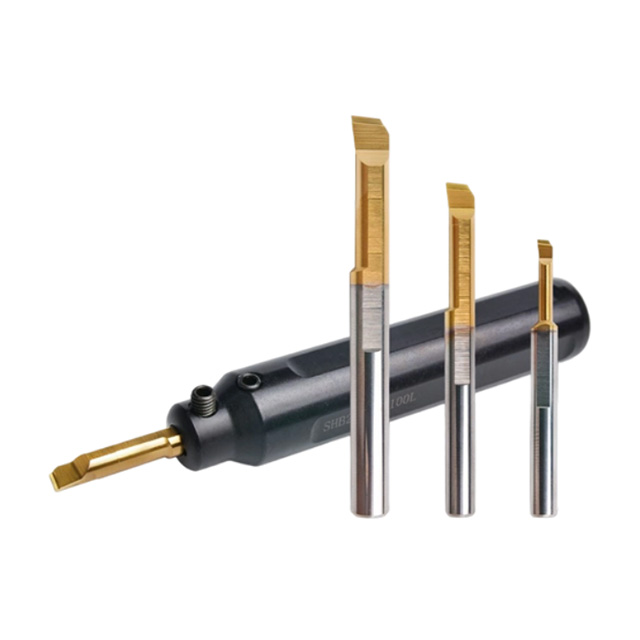
How do you know it is time to upgrade? You must evaluate your specific machining requirements objectively. The most common benchmark is the Length-to-Diameter (L/D) ratio. This ratio clearly defines your tool overhang. We divide the protruding length of the tool by its shank diameter.
We generally recommend standard steel for short overhangs. An L/D ratio under 3:1 works perfectly fine for standard steel. Once you exceed a 4:1 ratio, problems escalate quickly. Deflection increases exponentially as length increases. At a 5:1 ratio, a steel bar bends excessively. Upgrading becomes absolutely mandatory at this stage.
Assess your tolerance and finish demands carefully. Is your current tool the primary bottleneck? Sometimes you hit a production ceiling. You cannot improve your surface finish despite changing inserts multiple times. The bar itself might lack the necessary underlying rigidity. Moving to a stiffer material often cures mysterious surface finish problems instantly.
Tool life and material toughness present another complex balancing act. Solid carbide is exceptionally hard. However, extreme hardness brings inherent brittleness. Premium bars can snap under sudden, heavy shocks. Tool steel absorbs mechanical shock much better. If you face heavy interrupted cuts, steel might actually survive longer. You must balance the risk of catastrophic breakage against the absolute need for rigidity.
Pushing standard steel beyond a 4:1 L/D ratio to save upfront money.
Using brittle premium bars for aggressive interrupted roughing cuts.
Ignoring the spindle condition before blaming the tool material.
Property | Standard Steel | Solid Carbide |
|---|---|---|
Young's Modulus (Rigidity) | ~200 GPa | ~600 GPa |
Vibration Resistance | Low to Moderate | Excellent |
Ideal L/D Ratio | Up to 3:1 | 4:1 to 7:1 |
Shock Tolerance | High (Forgiving) | Low (Brittle) |
Thermal Expansion | Moderate | Very Low |
Modern tooling incorporates brilliant engineering solutions to solve old problems. A carbide boring bar with internal coolant dramatically improves process reliability. High-pressure coolant delivers fluid directly to the active cutting edge. This localized cooling dissipates friction heat instantly. It also blasts strings of chips out of deep holes. Poor chip evacuation ruins many deep-bore operations. Recutting old chips destroys surface finish rapidly. Internal routing guarantees fluid reaches the target area.
Setup time often costs more than the tools themselves. A quick change boring bar for high-speed CNC machining addresses this exact problem. High-mix environments require constant tool swaps. Quick-change systems utilize precise modular heads. You leave the expensive shank clamped tightly in the machine. You only swap the front cutting head. This modularity balances high performance with rapid setup times. Operators return to production in seconds rather than minutes.
Sometimes, standard geometries cannot reach specific part features. A reverse boring cutter for CNC lathe internal machining solves this dilemma. We use these tools for complex back-boring applications. Pulling the tool outward requires highly specific geometry. The cutting forces act entirely differently during a reverse bore. You need specialized designs to handle these unique tension loads safely. Standard bars often fail under reverse pulling forces.
Adopting premium tooling brings entirely new shop floor challenges. You must manage material fragility carefully. Tool breakage is incredibly expensive. Mitigating this risk requires strict operating procedures. You must clamp the tool perfectly every single time. Center-height alignment is absolutely critical. Even a tiny height deviation increases side loads dramatically. These side loads will snap a brittle shank instantly. You must also implement strict collision prevention protocols within your CNC programming.
Your tool holder interface is vital. The holder must match the bar's quality. A cheap holder ruins a premium tool immediately. You should use split collar sleeves instead of direct set screws. Set screws create dangerous stress risers. They point-load the shank in one spot. This uneven pressure leads directly to micro-fractures. A split sleeve distributes clamping force evenly around the circumference. It ensures a highly secure, vibration-free setup.
You will eventually face machining failures. Troubleshooting requires a methodical, calm approach. Do not immediately blame the material choice. Many variables affect internal turning. You should inspect the entire setup before discarding an expensive tool.
Check center height alignment using a dial indicator first.
Inspect the insert wear pattern closely for signs of rubbing.
Verify your feed rate is aggressive enough to properly break chips.
Ensure the clamping sleeve is entirely free of metal debris.
Confirm your coolant concentration meets manufacturer specifications.
Moving beyond initial unit prices is essential for modern shops. You must calculate true cost-per-part savings. Premium rigid tools allow significantly increased feed rates. They also reduce manual rework and expensive scrap. These positive factors lower your overall production costs dramatically. A tool costing three times more might pay for itself in one shift. You achieve this through faster cycle times alone.
You should optimize your tooling inventory spend intelligently. Standardization vs specialty is a constant debate. When do you keep a mixed inventory? Use standard materials for roughing out interrupted cuts. Use premium rigid tools strictly for deep finishing passes. This hybrid approach protects your expensive assets. It keeps roughing costs low while guaranteeing tight final tolerances.
Vendor selection criteria matter immensely. Look closely at a manufacturer's technical data. Demand actual vibration analysis reports. Check their internal coolant pressure capabilities. A good vendor provides application-specific feed and speed charts. They stand behind their products through solid engineering support. Never buy premium tooling based on price alone. You are buying a complete machining solution.
Request test data for similar material applications before purchasing.
Verify compatibility across your existing tool block ecosystem.
Assess local inventory availability to prevent future downtime.
The transition to a premium rigid tooling setup is rarely just a simple swap. It represents a major process optimization move for your entire shop. Aligning your tool selection carefully improves output quality. You must match the specific L/D ratio and material hardness of your workpieces. Taking these steps allows you to achieve tighter tolerances and higher daily throughput. You will eliminate frustrating bottlenecks caused by deflection. Remember to prioritize absolute rigidity in your setup always. Secure clamping and perfect center height are non-negotiable. Reserve premium materials for the high-precision, deep-hole scenarios where standard physical limitations fail. By following these guidelines, you maximize your machining efficiency and protect your tooling investments.
A: Generally, steel should be limited to 3:1 to avoid unacceptable deflection. Beyond this, solid carbide or heavy-metal damped bars are recommended.
A: Yes, carbide is harder but more brittle. They handle vibration better but are less forgiving during tool crashes or improper clamping.
A: Yes, by providing immediate chip evacuation and temperature control at the cutting edge, it significantly reduces the likelihood of re-cutting chips and thermal deformation.
A: Yes, but the benefit is most realized in CNC applications where consistent, repeatable geometry and high-speed dampening are required.


