Views: 0 Author: Site Editor Publish Time: 2026-11-04 Origin: Site


Choosing between a lathe collet and a jaw chuck presents a critical workholding dilemma for CNC shop managers and production engineers. This decision goes far beyond merely gripping a part securely. It actively dictates your cycle times, establishes spindle speed limits, and defines your automation potential. Modern manufacturing shows a massive shift away from universal workholding systems like jaw chucks toward application-specific setups. Shops now prioritize tailored clamping methods to dramatically reduce machine downtime and lower costly scrap rates. This guide provides an objective, data-backed evaluation framework to help you navigate these choices. You will learn how to determine which workholding system maximizes throughput and precision based on your specific part mix. We will also explore how material variance and automation goals influence your final setup strategy.
The 3-Inch Threshold: Jaw chucks dominate for large, heavy, or irregular workpieces (typically over 3 inches in diameter), while collet chucks excel in high-speed turning of smaller bar stock.
Speed & Centrifugal Force: Collet systems maintain consistent clamping force at high RPMs, whereas traditional jaw chucks lose grip force as spindle speed increases.
Automation Readiness: A lathe collet is essential for lights-out manufacturing and continuous bar feeding operations.
Z-Axis Control: Specific collet designs (dead-length) eliminate the Z-axis shift inherent in traditional pull-back chucks, ensuring superior length tolerances.
Material Variance Risks: Collets require strict material diameter tolerances; jaw chucks easily adapt to varying or rough-sawn stock.
Every successful machining operation starts with clearly defined success criteria. In most shops, the ultimate goal remains lowering the cost-per-part while maintaining strict quality standards. To evaluate your workholding options effectively, you must track specific performance metrics. These metrics include setup time, changeover frequency, surface finish requirements, and the level of operator intervention needed. The right choice directly optimizes these areas.
Many shops face hidden costs because they select the wrong clamping system. We often see operators struggle with jaw crushing on thin-walled parts. This excessive pressure distorts fragile components, leading to scrapped parts and wasted material. Furthermore, swapping out heavy jaw chucks for low-volume, high-mix runs causes significant machine downtime. This lost spindle time drains profitability.
Common Mistakes in Goal Framing:
Ignoring the physical weight of chucks during frequent changeovers.
Overlooking the scrap cost associated with part deformation.
Failing to account for operator fatigue during manual part loading.
You must honestly evaluate your shop capabilities and current business model. Assess whether your facility prioritizes high-mix, low-volume flexibility or low-mix, high-volume automation. Shops focusing on prototypes and frequent changeovers typically favor jaw chucks. Conversely, facilities aiming for continuous, unattended production naturally lean toward collet systems.
Jaw chucks remain the heavy-duty standard across the machining industry. Most engineers are highly familiar with traditional 3-jaw and 4-jaw mechanics. A 3-jaw scroll chuck provides self-centering capabilities, making it easy to load round or hexagonal stock quickly. Meanwhile, a 4-jaw independent chuck allows operators to dial in irregular castings with exceptional runout precision. These systems offer superior grip on large diameters, heavy forgings, and asymmetric geometries.
The primary advantage of a jaw chuck lies in its massive clamping range. A single set of standard hard jaws can grip a wide variety of diameters. You do not need a tooling change every time your stock size shifts by a few millimeters. This adaptability makes them indispensable for job shops that tackle unpredictable work daily.
However, we must view these systems through a skeptical lens regarding operational limitations. The most critical issue involves centrifugal force degradation. As spindle speeds increase, the physical mass of the jaws pulls them outward away from the center. This outward pull severely negatively impacts jaw grip force at high RPMs. Machinists often have to reduce cutting speeds to prevent parts from flying out.
Clearance issues pose another significant challenge. Bulky jaws restrict tool access, particularly when you machine small parts. Complex multi-axis turning centers often require tools to get extremely close to the spindle nose. Large chuck jaws easily cause catastrophic tool collisions in these tight spaces. Finally, you face high deformation risks. Jaw chucks apply massive force at three distinct pressure points. This localized pressure easily distorts thin-walled tubing or fragile aerospace components.
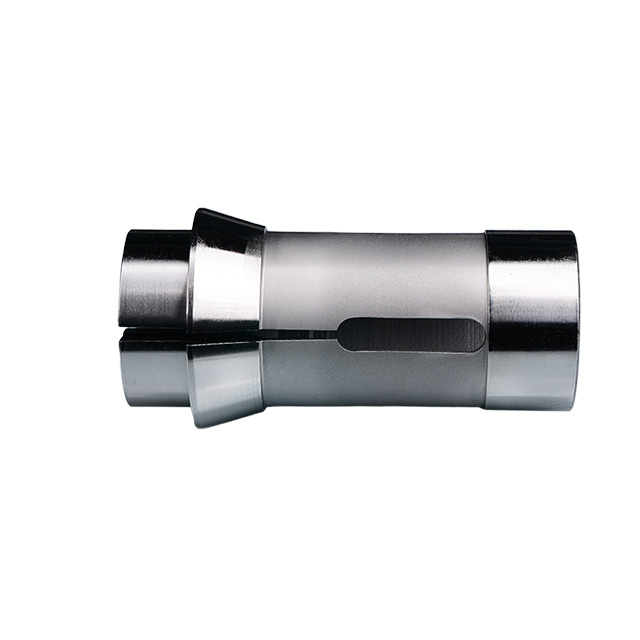
Collet systems offer an entirely different mechanical approach to clamping. Rather than pinching the part at specific points, a lathe collet for CNC workholding utilizes 360-degree clamping dynamics. The slotted steel wraps completely around the circumference of the workpiece. This uniform pressure distribution prevents part distortion and eliminates unsightly marring on finished surfaces.
High-speed stability stands out as a paramount advantage. Collets feature low mass and a highly symmetrical design. Unlike heavy chuck jaws, a collet does not suffer from significant centrifugal force loss. This physics advantage allows collets to run safely at maximum spindle speeds without losing their grip. Faster RPMs lead directly to reduced cycle times and improved surface finishes.
Modern manufacturing often requires specialized tooling to hit extreme tolerances. For instance, micro-machining relies heavily on specialized clamping. A Swiss lathe collet for precision part clamping remains crucial for producing medical devices, watch components, and tight-tolerance aerospace parts. These environments demand near-zero runout and perfect concentricity, which standard chucks cannot provide.
Z-axis control represents another specialized challenge. Standard pull-back collets draw the stock slightly into the spindle as they close. This movement shifts the overall length of the part before machining even begins. To counter this, engineers specify a dead-length lathe collet for precision clamping. The dead-length design pushes a sleeve over a stationary collet, eliminating the pull-back effect during actuation. This ensures you maintain strict overall length tolerances across thousands of parts.
To make an informed decision, you must compare these systems across practical production dimensions. We will look at how mechanical features translate into actual floor outcomes.
In continuous production environments, automation dictates profitability. Collet chucks integrate seamlessly with bar feeders. Using bar feeder collets for automatic bar feeding enables continuous, unattended machining. The machine pulls fresh stock through the spindle, clamps it securely, and machines the next part without stopping. Conversely, jaw chucks typically require manual loading or expensive robotic tending, slowing down high-volume runs.
Setup times drastically impact daily throughput. When using a jaw chuck for precision work, operators must often bore soft jaws to match the exact part diameter. This boring process takes time and consumes raw material. In contrast, quick-change collet systems allow an operator to simply snap in a new collet size within seconds. This rapid changeover keeps the spindle turning and the machine making chips.
Rigidity directly affects surface finish quality and tool life. A collet chuck features a very low profile. This compact design allows turning tools to get much closer to the spindle bearing. Working closer to the bearing increases system rigidity compared to turning parts extended out of protruding jaw chucks. Better tool clearance also allows for more aggressive tool paths without collision fears.
Spindle capacity often restricts the size of bar stock you can run. Collet chucks typically maximize the machine's true spindle capacity. The collet mechanism sits neatly within the spindle nose. However, the drawtube required for a standard jaw chuck system occupies valuable space. This drawtube thickness often limits the maximum bar diameter you can feed through the machine.
Table 1: Head-to-Head Workholding Comparison
Evaluation Dimension | Jaw Chucks | Collet Chucks |
|---|---|---|
Automation Readiness | Low to Medium (Requires robotic tending) | High (Ideal for bar feeders) |
Changeover Speed | Slow (Boring soft jaws required) | Fast (Quick-change snap-in designs) |
Max RPM Capability | Limited by centrifugal jaw force loss | Excellent (Maintains grip at high speeds) |
Tool Clearance | Poor (Bulky jaws cause collision risks) | Excellent (Low profile design) |
Stock Adaptability | High (Grips wide range of variances) | Low (Requires strict material tolerances) |
Transitioning between workholding systems carries distinct implementation risks. Production engineers must carefully evaluate potential pitfalls before overhauling their machine setups.
The most dangerous pitfall is the material variance trap. Standard collets possess a very narrow gripping range, typically limited to +/- 0.001 to 0.005 inches. If your purchasing department buys rough, extruded, or out-of-round stock, you will face severe problems. Inconsistent diameters cause collet failure, uneven clamping pressure, or stock slipping during heavy cuts. If your shop routinely processes rough-sawn materials, jaw chucks easily adapt to these imperfections.
You must also address the financial realities of both systems. A heavy-duty jaw chuck represents a single, versatile upfront investment. It handles countless jobs straight out of the box. A collet system requires purchasing an initial spindle adapter. Beyond that, you must build an extensive library of collets for every specific diameter you plan to machine. This upfront tooling investment can scale quickly if your part sizes vary wildly.
Best Practices for Changeovers:
Standardize part sizes across product lines to minimize collet swaps.
Use quick-change spindle adapters to reduce conversion downtime.
Train operators to clean spindle tapers thoroughly during every changeover.
Spindle conversion downtime presents a hidden labor burden. Swapping from a jaw chuck to a collet chuck on the same machine often takes hours. The operator must remove the heavy chuck, clean the spindle nose, install the collet adapter, and adjust the drawtube stroke. Shops that frequently switch back and forth lose valuable production hours. To mitigate this risk, many modern facilities invest in fast-swap spindle noses that allow conversions in minutes rather than hours.
You need a clear decision matrix to choose the right system. Follow this shortlisting logic based on your dominant production characteristics.
When to Spec a Jaw Chuck: Select this system when processing parts larger than 3 inches in diameter. They remain ideal for castings, heavy forgings, and short-run, high-mix production schedules. If you regularly use raw materials with inconsistent diameters, the jaw chuck handles the variance effortlessly.
When to Spec a Collet Chuck: This system becomes mandatory for parts under 3 inches. You need it for high RPM requirements and any automated bar feeding operations. It is the only safe choice for thin-walled parts prone to crushing. Facilities running high-volume or lights-out production rely exclusively on collet setups.
Consider the Hybrid Approach: Some shops truly need 50/50 capabilities. In these cases, you should explore hybrid solutions. Quick-change collet systems now exist that fit directly into standard jaw chucks. Alternatively, fast-swap spindle noses allow you to switch between chucks and collets rapidly. These hybrid setups offer maximum flexibility without sacrificing extreme precision.
Ultimately, neither workholding system stands as universally superior across all machining disciplines. Your final decision remains entirely dictated by your specific part geometry, average lot size, and long-term automation strategy. Jaw chucks will always hold their ground in heavy roughing and large-diameter work. Meanwhile, collets dominate the high-speed, automated turning sector.
Your immediate next step involves conducting a thorough audit of your current part mix. Document your average workpiece diameters, maximum RPM limits, and identify where changeovers create bottlenecks. Analyze your scrap rates related to part deformation. Gather this hard data before you invest heavily in new workholding infrastructure. Armed with these insights, you can deploy a system that actively boosts your shop's profitability and throughput.
A: Yes, but not in a standard round collet. You must purchase specialized hex and square collets designed specifically for those profiles. These shaped collets provide full surface contact along the flats of the material. A 4-jaw chuck can also hold square stock, but it lacks the rapid actuation and high-speed balance of a dedicated square collet.
A: A traditional bolt-on changeover typically takes an experienced operator one to two hours, as it involves removing the heavy chuck and adjusting the drawtube. However, modern quick-change spindle systems and adapter plates can reduce this conversion time to under twenty minutes, drastically minimizing machine downtime.
A: No, a collet chuck does not upgrade your machine's actual spindle motor limits. However, it allows you to safely utilize the existing maximum RPM of your machine. Jaw chucks often force you to lower speeds due to centrifugal grip loss, whereas collets maintain clamping force even at max RPM.
A: A pull-back collet draws the workpiece slightly into the spindle as the mechanism tightens, causing a minor Z-axis shift. A dead-length collet uses a stationary inner collet and a sliding outer sleeve. The sleeve pushes forward to clamp, completely eliminating the Z-axis shift and maintaining strict part length tolerances.


