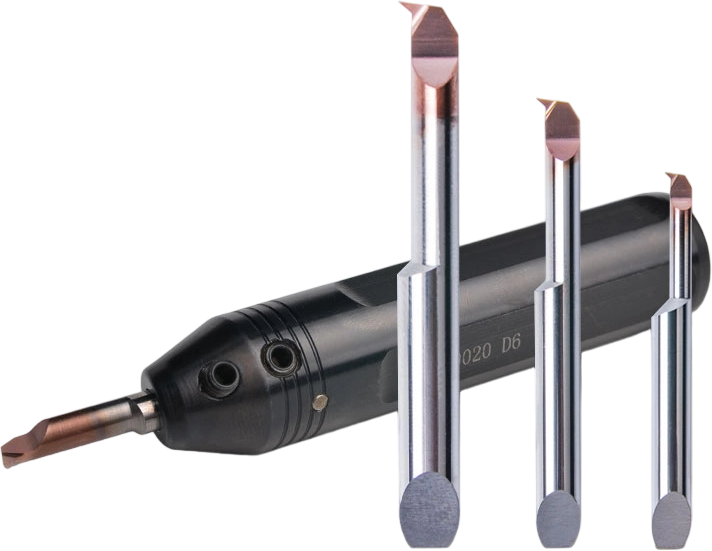
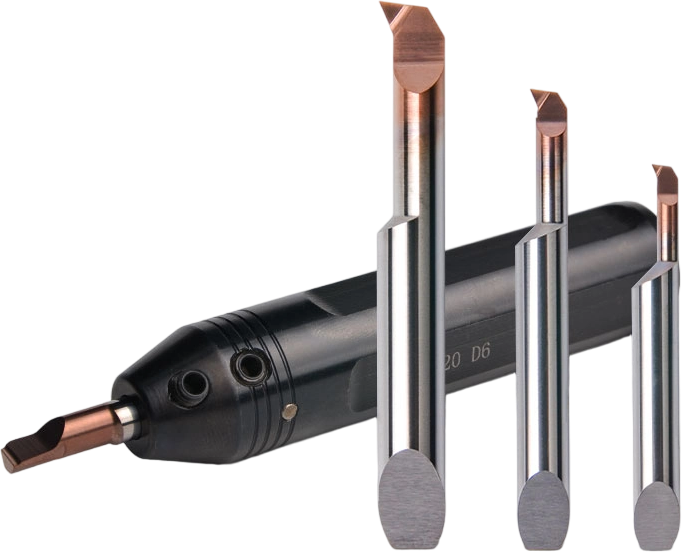
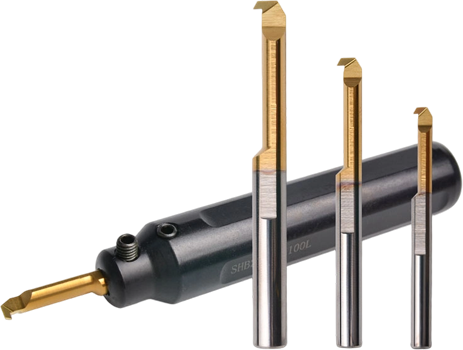
In modern precision manufacturing, Micro Boring Bars play a critical role in achieving stable and accurate small hole machining, particularly when internal diameters fall below 6 mm and tolerances approach micron-level precision. Unlike conventional boring tools, micro boring bars must operate within extremely limited space while maintaining rigidity, controlling vibration, and ensuring efficient chip evacuation. Because small diameter tools are inherently slender, the challenges of tool deflection, chatter, and heat concentration become significantly more pronounced. Selecting the correct micro boring cutter—considering material stiffness, cutting geometry, coating technology, and length-to-diameter ratio—is therefore essential for achieving reliable micro internal machining performance.
Industries such as medical device manufacturing, aerospace components, precision molds, and electronic connectors increasingly rely on micro machining technologies to produce miniature features with extremely tight tolerances. In these applications, small hole machining cannot rely on drilling alone. Drills may produce the initial hole, but micro boring bars are required to correct diameter accuracy, improve roundness, and achieve the required surface finish. For machining engineers, understanding the engineering principles behind micro boring stability is essential for achieving consistent results and maximizing tool life.
1.What Are Micro Boring Bars?
Micro boring bars are specialized internal cutting tools designed to enlarge and finish small diameter holes. Typically, these tools operate in diameter ranges from 0.3 mm to about 6 mm, although some advanced micro boring systems can machine even smaller features depending on machine capability.
Unlike standard boring tools used in general turning operations, micro boring bars are designed with extremely small shank diameters and optimized geometries that allow them to enter narrow internal cavities. These tools are often manufactured from ultra-fine grain carbide or other high-stiffness materials to maintain rigidity during cutting.
A micro boring cutter may either be a solid cutting edge integrated into the tool body or an indexable insert designed specifically for small diameter internal machining. Both designs aim to reduce cutting forces while maintaining edge strength.
Micro boring bars are commonly used in CNC lathes, Swiss-type lathes, and high-precision machining centers where internal dimensions must be controlled within a few microns.
2.Why Small Hole Machining Requires Micro Boring Cutters
Small hole machining introduces mechanical constraints that are not present in larger machining operations. As tool diameter decreases, the stiffness of the cutting tool drops dramatically. This reduction in rigidity increases the likelihood of tool deflection and vibration during cutting.
In micro internal machining, even a tiny radial deflection can significantly affect bore quality. For example, a deflection of only 5 µm may produce noticeable taper or dimensional deviation in a small diameter bore. Because micro boring bars often operate at high spindle speeds and extended reach lengths, controlling tool stability becomes the most important factor in achieving consistent machining results.
Chip evacuation also becomes more difficult in small hole machining. The limited space inside the bore restricts chip flow, making it easier for chips to accumulate and damage the cutting edge. If chips recut against the bore wall, the surface finish can deteriorate rapidly.
For these reasons, micro boring cutters are designed with optimized cutting geometries and coolant delivery strategies that help maintain stable cutting conditions even in extremely confined spaces.
3.Engineering Principles Behind Micro Boring Stability
The stability of micro boring operations is primarily governed by mechanical deflection and vibration behavior. A boring bar acts like a cantilever beam subjected to cutting forces at its tip. When the tool extends into the workpiece, the unsupported length increases, making the tool more susceptible to bending.
The amount of deflection depends on several factors, including tool material stiffness, tool diameter, overhang length, and cutting force. Because deflection increases with the cube of the tool length, even a small increase in overhang can dramatically reduce tool stability.
This relationship explains why machinists often focus on the length-to-diameter ratio (L/D ratio) when selecting micro boring bars. In many machining environments, maintaining an L/D ratio below 4:1 provides good stability. When the ratio increases beyond 6:1. vibration becomes much more likely.
Because micro boring bars frequently operate at higher ratios due to geometric constraints, manufacturers often use ultra-stiff materials such as tungsten carbide to compensate for the reduced tool diameter.
4.Tool Materials Used in Micro Boring Bars
Material selection is one of the most important considerations in micro boring tool design. The stiffness and wear resistance of the tool material directly affect machining stability and tool life.
Solid Carbide Micro Boring Bars
Solid carbide is the most widely used material for micro boring bars because of its exceptional rigidity. Carbide has a modulus of elasticity roughly two to three times higher than steel, which means it resists bending forces much more effectively.
This increased stiffness allows carbide micro boring bars to maintain dimensional accuracy even when the tool extends deep into the bore. For small diameter tools below 8 mm, carbide is generally considered the best material choice.
Steel Boring Bars
Steel boring bars are sometimes used in larger diameter applications where rigidity requirements are less demanding. Steel tools are more impact-resistant than carbide and may be more economical for general machining.
However, because steel is significantly less rigid, it is rarely used for very small diameter boring operations.
Advanced Damped Boring Bars
In situations where extremely long reach is required, some boring bars incorporate internal damping mechanisms. These anti-vibration boring bars absorb cutting vibrations and stabilize the machining process. While highly effective in larger diameters, they are less common in micro boring applications due to size constraints.
5.Micro Boring Cutter Geometry and Cutting Edge Design
The geometry of the cutting edge strongly influences cutting forces and chip formation. Micro boring cutters typically use positive rake angles to reduce cutting resistance and minimize tool deflection.
A sharp cutting edge helps reduce the cutting pressure required to remove material. Lower cutting forces translate directly into improved tool stability and reduced vibration.
However, extremely sharp edges may wear quickly, particularly when machining tough materials such as stainless steel or titanium. To balance sharpness and durability, tool manufacturers often apply controlled edge preparation techniques such as micro-honing.
Chipbreaker geometry is also carefully designed to control chip shape. Proper chip formation ensures that chips curl and break before they accumulate inside the bore.
6.Cutting Parameters for Micro Boring Applications
Cutting parameters must be carefully optimized to maintain stability during micro internal machining. Because tool rigidity is limited, aggressive cutting conditions can quickly lead to chatter or tool breakage.
Typical cutting speeds for carbide micro boring tools range between 60 m/min and 150 m/min, depending on the workpiece material and tool coating. Feed rates are usually very small compared with external turning operations, often ranging from 0.005 mm to 0.02 mm per revolution for finishing passes.
Depth of cut is typically kept minimal during finishing operations to maintain dimensional accuracy. Roughing operations may use slightly larger depths of cut, but machinists often leave a small finishing allowance to correct any minor deflection.
Maintaining consistent chip thickness is essential for stable cutting. Sudden changes in feed or depth of cut can introduce vibrations that degrade surface quality.
7.Chip Evacuation Challenges in Micro Hole Machining
Chip evacuation becomes increasingly difficult as bore diameter decreases. Chips generated during cutting must travel through a narrow channel between the tool and the bore wall.
If chips accumulate inside the bore, they may become trapped and cause recutting. This can scratch the surface finish or damage the cutting edge.
To address this issue, many modern micro boring bars incorporate through-coolant channels that deliver coolant directly to the cutting zone. High-pressure coolant helps flush chips away from the cutting edge while simultaneously reducing heat buildup.
Effective chip evacuation improves both surface finish and tool life.
8.Industrial Applications of Micro Boring Bars
Micro boring technology is essential in industries where miniature components require extremely tight tolerances.
In medical device manufacturing, micro boring bars are used to machine surgical instruments, implant components, and precision tubing. These parts often require excellent surface finishes and precise internal diameters.
In the aerospace industry, micro boring tools are used to produce small hydraulic components, fuel system parts, and sensor housings where dimensional accuracy is critical.
The mold and die industry also relies on micro boring tools to produce cooling channels and ejector pin holes in high-precision molds.
Additionally, electronics and connector manufacturing frequently requires small hole machining for miniature electrical contacts and connectors.
9.Common Problems in Micro Boring and How to Solve Them
Chatter is one of the most common problems encountered during micro boring operations. Excessive tool overhang or insufficient tool rigidity can lead to vibration, resulting in poor surface finish and inconsistent bore dimensions.
Tool breakage may occur if cutting parameters are too aggressive or if chips become trapped inside the bore. Reducing feed rates and improving chip evacuation can help prevent this problem.
Rapid tool wear is another common issue, particularly when machining difficult materials. Selecting appropriate coatings and maintaining proper coolant flow can significantly extend tool life.
Understanding these challenges allows machinists to adjust tooling strategies before productivity is affected.
10.How to Select the Right Micro Boring Cutter
Selecting the optimal micro boring cutter requires evaluating several factors. Tool diameter should be as large as possible while still fitting inside the bore. Larger diameters increase rigidity and reduce deflection.
The length-to-diameter ratio should be minimized whenever possible. Shorter overhangs significantly improve machining stability.
Tool material and coating must match the workpiece material. Carbide tools with advanced coatings often provide the best balance between durability and cutting performance.
Machine capability also plays an important role. High-precision spindles with minimal runout are essential for maintaining stable micro machining operations.
11.Conclusion
Micro boring bars are indispensable tools for modern precision manufacturing, enabling machinists to achieve high-accuracy small hole machining across a wide range of industries. Because these tools operate under extremely challenging mechanical conditions, their design must carefully balance rigidity, cutting efficiency, and chip evacuation performance.
By selecting the correct micro boring cutter, optimizing tool geometry, and maintaining stable machining parameters, manufacturers can achieve excellent surface finish, tight tolerances, and long tool life. As manufacturing technologies continue to evolve and component sizes become smaller, the importance of advanced micro boring solutions will only continue to grow.
FAQ
What diameter range is considered micro boring?
Micro boring typically refers to internal machining operations with diameters below about 6 mm.
Why are carbide micro boring bars preferred?
Carbide provides significantly higher stiffness than steel, reducing tool deflection during machining.
What is the ideal L/D ratio for micro boring bars?
An L/D ratio below 4:1 generally provides stable machining conditions.
How can chatter be reduced during micro boring?
Using larger tool diameters, minimizing overhang, and optimizing cutting parameters can help reduce vibration.
Why is chip evacuation important in micro boring?
Poor chip evacuation can cause chip recutting, which damages the surface finish and increases tool wear.
What industries rely most on micro boring tools?
Medical device manufacturing, aerospace components, mold production, and electronics industries commonly use micro boring technology.