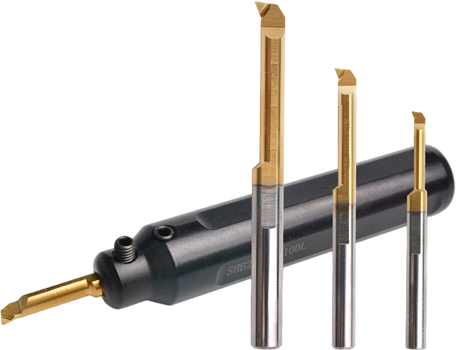
Selecting the right boring tool for stainless steel is one of the most critical factors in achieving stable internal machining, especially when tight tolerances, smooth surface finishes, and long tool life are required. Stainless steels are well known for their work-hardening behavior, low thermal conductivity, and high toughness, which makes internal boring operations significantly more demanding than machining carbon steels. If the wrong boring bar material, insert geometry, or cutting parameters are used, the result is often excessive tool wear, vibration, and poor bore quality. A properly selected stainless steel boring tool must balance rigidity, edge sharpness, and heat resistance to maintain consistent cutting performance.
In modern CNC machining environments—particularly in aerospace, medical device manufacturing, and precision mechanical components—boring stainless steel requires a combination of advanced carbide inserts, rigid boring bars, and optimized cutting parameters. Stainless steels such as 304. 316. and duplex grades generate high cutting forces and significant heat at the cutting zone. Because internal machining limits chip evacuation and heat dissipation, engineers must carefully choose boring tools that minimize cutting pressure while maintaining edge durability. Understanding the relationship between tool material, geometry, and cutting conditions is essential for reliable stainless steel boring operations.
1.Why Stainless Steel Is Difficult to Bore
Stainless steel is widely used because of its corrosion resistance, strength, and durability, but these same properties create major challenges during machining. One of the most significant issues is work hardening. When stainless steel is cut, the material near the cutting edge can harden rapidly, sometimes increasing hardness by 20–30%. If the cutting tool does not maintain a consistent feed rate and sharp edge, the tool may begin cutting into hardened material, accelerating wear and increasing cutting forces.
Another challenge is poor thermal conductivity. Stainless steel conducts heat much more slowly than materials like aluminum. As a result, a large portion of the heat generated during machining remains concentrated at the cutting edge. In internal boring operations where coolant access is limited, this heat buildup can lead to rapid tool wear or edge failure.
Stainless steel also tends to produce long, continuous chips. During internal machining these chips can accumulate inside the bore, causing surface scratching or tool breakage. Effective chip control is therefore essential when selecting a boring tool for stainless steel.
2.Types of Boring Tools for Stainless Steel
Several types of boring tools are commonly used for stainless steel machining. The selection depends on bore diameter, depth, tolerance requirements, and production volume.
a.Solid Carbide Boring Bars
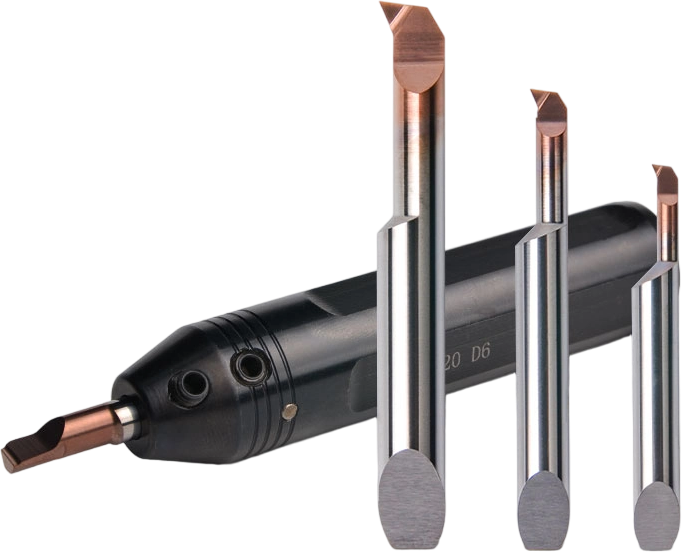
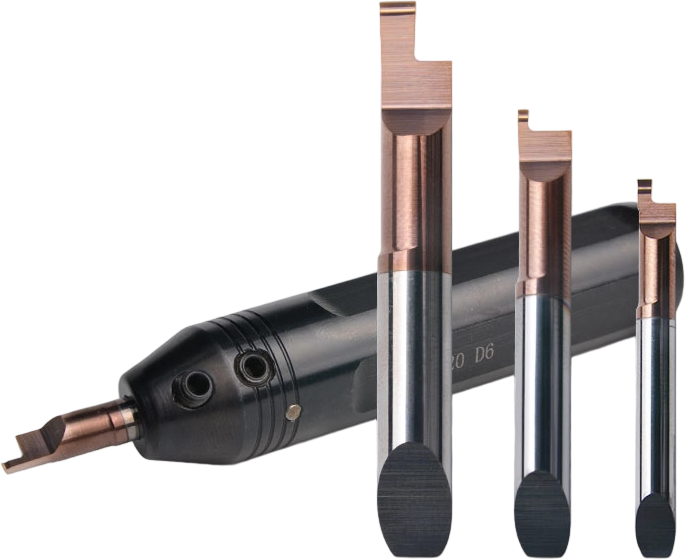
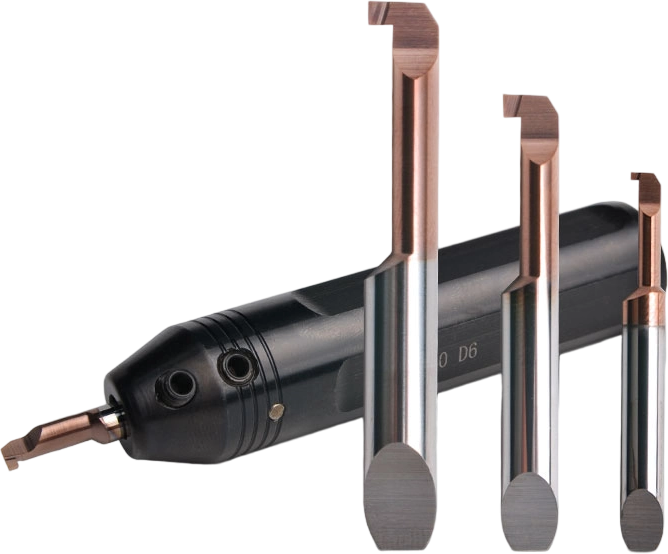
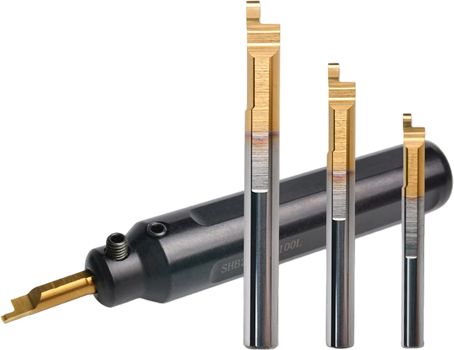
Solid carbide boring bars are widely used in small diameter internal machining due to their exceptional rigidity. Carbide has a much higher modulus of elasticity than steel, allowing the tool to resist bending during cutting. This increased stiffness helps maintain dimensional accuracy and reduce vibration when machining stainless steel.
Carbide tools are especially valuable when the bore diameter is small or when the tool must extend deep into the workpiece. In these situations, maintaining rigidity is essential for achieving good surface finish and avoiding chatter.
b.Indexable Insert Boring Bars
For larger bores and higher production environments, indexable boring bars with replaceable carbide inserts are often preferred. These tools allow worn inserts to be replaced quickly without removing the entire tool from the machine.
Indexable systems also provide a wide range of insert geometries optimized for stainless steel. Many inserts feature specialized coatings designed to withstand high temperatures and resist adhesive wear, which is common when machining austenitic stainless steels.
c.Anti-Vibration Boring Bars
When the length-to-diameter ratio becomes large, vibration becomes a serious concern. Anti-vibration boring bars incorporate internal damping mechanisms that absorb vibration and stabilize the cutting process. These tools are particularly useful for deep internal machining where standard boring bars would experience chatter.
Although these bars are more expensive, they can significantly improve productivity and surface finish in difficult stainless steel applications.
3.Tool Materials and Coatings for Stainless Steel Boring
The performance of a stainless steel boring tool depends heavily on the insert material and coating technology.
Carbide inserts remain the most widely used option because they offer a strong combination of wear resistance and toughness. Modern micro-grain carbide grades provide improved edge strength while maintaining sharp cutting geometry.
Coatings play a critical role in protecting the cutting edge from heat and adhesion. Common coatings used in stainless steel boring include:
TiAlN (Titanium Aluminum Nitride) for high temperature resistance
AlTiN (Aluminum Titanium Nitride) for improved oxidation resistance
PVD coatings that maintain sharp cutting edges for finishing operations
These coatings reduce friction at the cutting interface and help prevent built-up edge formation, which is common when machining stainless steels.
4.Cutting Geometry and Edge Preparation
The cutting geometry of a boring insert directly affects cutting forces and chip formation. Stainless steel machining generally benefits from positive rake angles, which reduce cutting pressure and make chip formation easier.
A sharper cutting edge helps minimize work hardening by cutting cleanly rather than deforming the material. However, extremely sharp edges may wear quickly. To balance sharpness and durability, manufacturers often apply a controlled micro-edge preparation or honing process.
Chipbreaker design is also important. Inserts used for stainless steel boring typically feature chipbreaker geometries that produce short, manageable chips even at low feed rates.
5.Recommended Cutting Parameters for Stainless Steel Boring
Cutting parameters for stainless steel depend on the specific grade and tool material, but typical starting values can be established.
For carbide inserts machining austenitic stainless steel such as 304 or 316. cutting speeds generally range between 80 and 180 m/min depending on coating and machining conditions. Feed rates in internal boring operations are typically lower than external turning, often between 0.05 and 0.20 mm per revolution.
Depth of cut during finishing passes is usually kept relatively small to minimize tool deflection and maintain dimensional accuracy. Stable chip formation should always be prioritized over aggressive material removal.
6.Controlling Vibration in Stainless Steel Boring
Chatter is one of the most common problems when boring stainless steel, particularly when machining deep holes. Because boring bars act like cantilever beams, longer tool overhang increases the risk of vibration.
Several strategies can reduce chatter in stainless steel boring operations. Using the largest possible tool diameter increases stiffness and reduces deflection. Minimizing tool overhang also improves stability. Carbide boring bars provide higher rigidity compared with steel tools and are therefore better suited for demanding applications.
Proper toolholder selection is equally important. High-precision holders with minimal runout help maintain consistent cutting forces and reduce vibration.
7.Chip Evacuation and Coolant Strategy
Effective chip evacuation is essential when boring stainless steel. Long chips can become trapped inside the bore and damage the surface finish or break the cutting tool.
High-pressure coolant systems are widely used to direct coolant toward the cutting zone. This coolant performs two important functions: it removes heat from the cutting edge and helps flush chips away from the bore.
Through-coolant boring bars are particularly effective in deep-hole applications. These tools deliver coolant directly to the cutting edge, improving chip control and extending tool life.
8.Applications Requiring Stainless Steel Boring Tools
Boring tools designed for stainless steel are widely used in several advanced manufacturing industries.
In medical device manufacturing, stainless steels such as 316L are commonly used for surgical instruments and implants. These parts often contain small internal bores requiring excellent surface finish and tight tolerances.
The aerospace industry also relies heavily on stainless steel components. Hydraulic fittings, fuel system components, and sensor housings frequently require precision internal machining.
In chemical processing and energy equipment, stainless steel components must withstand corrosion and high pressure. Boring operations are used to create precise internal diameters in valves, pump components, and fluid connectors.
9.Common Problems When Boring Stainless Steel
Many machining problems can be traced to incorrect tool selection or improper cutting parameters. Built-up edge formation is common when cutting speeds are too low or when the tool edge is not sharp enough. Excessive vibration often results from high L/D ratios or insufficient tool rigidity.
Another common issue is rapid tool wear caused by heat accumulation. Stainless steel’s low thermal conductivity means that heat remains concentrated near the cutting edge. Without adequate coolant flow, the cutting tool may wear quickly.
Understanding these common challenges allows machinists to adjust tooling and parameters before productivity is affected.
10.Conclusion
Choosing the right boring tool for stainless steel requires careful consideration of tool material, insert geometry, coating technology, and machining parameters. Because stainless steels generate high cutting forces and retain heat during machining, internal boring operations demand rigid tools and optimized cutting conditions.
Carbide boring bars with specialized stainless-steel insert geometries offer the best balance of durability and cutting efficiency. When combined with proper coolant delivery, stable cutting parameters, and minimized tool overhang, these tools enable manufacturers to achieve consistent dimensional accuracy and excellent surface finish.
As industries such as aerospace, medical manufacturing, and energy systems continue to rely on stainless steel components, mastering the principles of stainless steel boring will remain essential for achieving reliable and cost-effective CNC machining.
FAQ
What is the best boring tool material for stainless steel?
Carbide boring bars with wear-resistant coatings are typically the best choice due to their strength and heat resistance.
Why is stainless steel difficult to bore?
Stainless steel work hardens, generates high cutting heat, and produces long chips that are difficult to evacuate from internal bores.
What cutting speed is recommended for stainless steel boring?
Carbide inserts typically operate between 80 and 180 m/min depending on the stainless steel grade and tool coating.
How can chatter be reduced in stainless steel boring?
Use a larger diameter boring bar, minimize overhang, and select rigid carbide tools with proper toolholders.