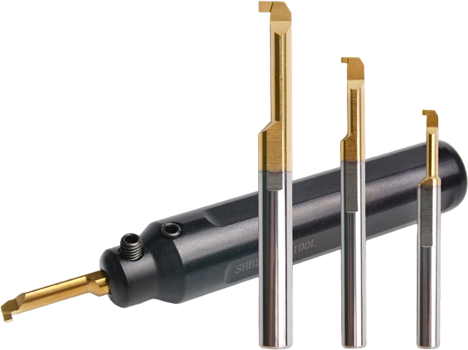
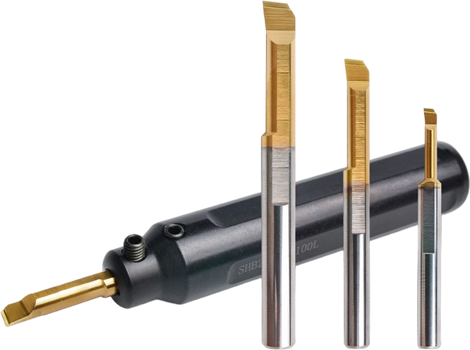
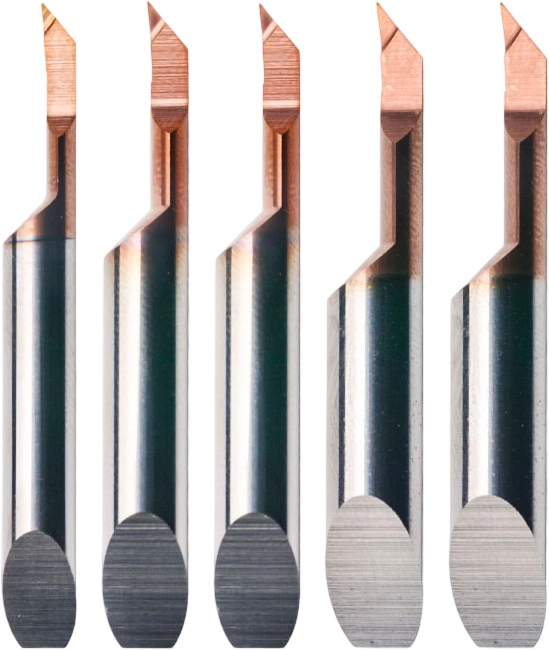
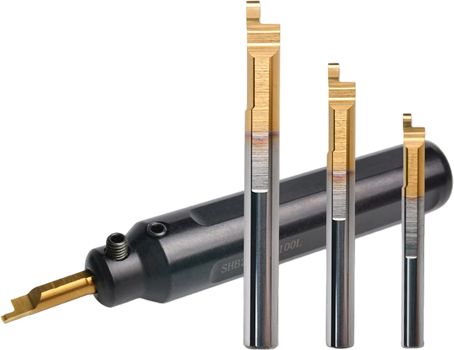
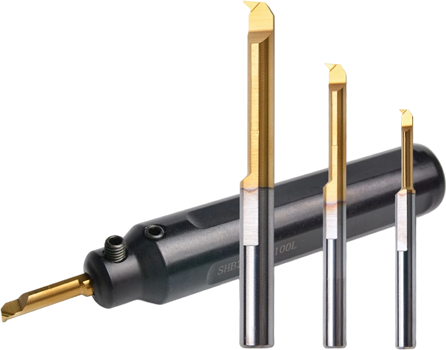
In precision CNC turning, internal machining becomes significantly more difficult as hole diameters shrink. Once the bore diameter drops below 10 mm, the balance between tool rigidity, cutting force, vibration control, and chip evacuation becomes extremely delicate. This is why the mini boring tool for CNC lathe has become an essential solution in modern precision machining. Unlike conventional boring bars, mini boring tools are engineered specifically for small-diameter internal turning, allowing machinists to maintain stability while achieving tight tolerances and high-quality surface finishes.
Manufacturers working with miniature components—especially in aerospace, medical devices, and high-precision automotive systems—often rely on specialized tooling to ensure machining reliability. At Insight-T, the development of high-performance internal turning tools focuses on solving real machining challenges such as tool deflection, chatter vibration, and inconsistent bore accuracy. With the right mini boring tool, CNC lathes can produce precise internal features even in extremely confined cutting environments. Understanding how these tools work and how to apply them effectively can dramatically improve both machining quality and production efficiency.
1.Understanding the Role of a Mini Boring Tool in CNC Internal Turning
Mini boring tool for CNC lathe is a compact internal machining tool designed to enlarge, finish, or precisely size small internal diameters that standard boring bars cannot reach effectively. While conventional boring tools are typically used for holes above 12 mm, mini boring tools are commonly used for internal diameters ranging from approximately 1 mm to 12 mm, depending on the machine configuration and tool design.
The main difference between a mini boring bar and a standard internal turning tool lies in its structural proportions. Because the shank diameter must be extremely small to enter narrow bores, the tool is inherently more sensitive to cutting forces. Even a small increase in cutting pressure can cause the tool to bend slightly, resulting in tapered holes or inconsistent internal dimensions. This is why the design of a mini boring tool must prioritize rigidity and stability above all else.
Tool manufacturers such as Insight-T focus heavily on structural optimization when designing miniature internal turning tools. By carefully controlling the tool’s geometry and material composition, it becomes possible to maintain adequate stiffness while still accessing extremely small internal cavities.
2.Why Small-Diameter Boring Is One of the Most Challenging Machining Processes
Small-hole machining introduces a number of physical limitations that do not appear in larger-scale turning operations. When a tool enters a narrow bore, the available space for chip flow becomes extremely limited, and the cutting edge operates under high mechanical stress relative to the tool’s cross-section.
One of the most common problems in small internal machining is tool deflection. Because mini boring tools have slender shanks, they can flex slightly when cutting forces act on the tool tip. Even a very small amount of deflection—often only a few microns—can cause measurable deviation in bore diameter. In industries where tolerance requirements are extremely tight, such as medical implants or aerospace hydraulic components, this type of deviation can quickly lead to rejected parts.
Vibration is another major issue. When a boring bar extends too far from the tool holder relative to its diameter, the cutting process may enter a resonance condition known as chatter. Chatter produces visible wave patterns inside the bore surface and significantly reduces machining quality. Once chatter begins, it becomes very difficult to maintain dimensional accuracy or surface finish consistency.
These machining realities explain why selecting a high-quality mini boring tool for CNC lathe is essential when performing precision internal turning operations.
3.Tool Material and Rigidity: Why Carbide Matters
The material used in a mini boring bar has a major influence on its performance. Traditional steel boring bars are suitable for many internal machining tasks, but when tools become extremely small, steel often lacks the stiffness required for stable cutting.
This is why most high-performance small diameter boring tools are manufactured from solid carbide. Carbide has a significantly higher modulus of elasticity than steel, which means it resists bending forces much more effectively. In practical terms, a carbide mini boring tool can maintain better stability during cutting, reducing the risk of vibration and dimensional error.
In addition to improved rigidity, carbide also provides better wear resistance and thermal stability. These properties are particularly important when machining difficult materials such as stainless steel or high-temperature alloys, where tool wear can quickly degrade machining accuracy.
Insight-T integrates high-grade carbide materials into its internal turning tool designs to ensure that machinists can maintain stable cutting conditions even when working with extremely small bores.
4.Insert Geometry and Cutting Edge Optimization
In micro internal turning operations, cutting edge geometry plays a much larger role than it does in standard machining. Because the tool is slender and cutting forces must remain low, the insert must be optimized to minimize resistance while maintaining durability.
Mini boring inserts typically feature very sharp cutting edges combined with positive rake angles. These design characteristics allow the cutting edge to slice through material smoothly rather than pushing against it, which reduces cutting pressure on the tool shank. Lower cutting forces translate directly into improved stability and better dimensional control.
Another important feature is the use of small nose radii. A smaller nose radius helps reduce radial cutting forces and makes it easier to maintain accurate internal dimensions. At the same time, polished rake faces help chips flow smoothly away from the cutting zone, reducing the risk of chip packing inside the bore.
In some extremely small machining applications, manufacturers may even use integral micro cutting edges instead of indexable inserts. These monolithic micro boring tools can provide extremely high precision in applications where standard inserts would be too large.
5.Managing the Length-to-Diameter Ratio for Stable Machining
One of the most important engineering concepts in internal turning is the length-to-diameter ratio (L/D ratio) of the boring bar. This ratio describes how far the tool extends from the holder relative to its diameter. The larger the ratio becomes, the greater the risk of vibration and tool deflection.
For most internal turning applications, machinists try to maintain an L/D ratio below 5 whenever possible. When the ratio approaches 6 or higher, the tool becomes significantly more prone to chatter. This is particularly true in small hole machining, where the tool diameter is already very limited.
A practical way to improve stability is simply to reduce tool overhang. Even a small reduction in extension length can noticeably increase rigidity. Insight-T mini boring tools are designed with optimized shank geometry to maintain stiffness while minimizing vibration during deep internal turning operations.
6.Cutting Parameters for Small Internal Machining
Although cutting parameters vary depending on the workpiece material and machine rigidity, stable cutting conditions are essential when using miniature internal turning tools.
In most cases, machinists prefer moderate cutting speeds combined with relatively light feed rates. For example, when machining steel, cutting speeds typically fall within the range of 80 to 140 meters per minute, while stainless steel may require slightly lower speeds to control heat generation. Aluminum alloys, on the other hand, allow significantly higher cutting speeds because of their lower cutting resistance.
Feed rates are generally kept low in order to minimize cutting forces on the tool tip. Finishing passes may use feeds as low as 0.01 millimeters per revolution, especially when surface finish quality is critical. Depth of cut is also limited in miniature internal turning operations, often remaining below 0.15 millimeters for precision finishing.
These conservative parameters help maintain stable cutting conditions while protecting the tool from excessive stress.
7.Industrial Applications for Mini Boring Tools
The demand for mini boring tools for CNC lathe applications continues to grow as industries move toward smaller and more precise components. In medical device manufacturing, miniature internal features are required in surgical instruments, implants, and micro-fluidic systems. These components often require extremely smooth internal surfaces and highly accurate bore diameters.
The aerospace industry also relies heavily on small internal machining for components such as hydraulic connectors, fuel system parts, and miniature valve assemblies. In these applications, precision internal turning tools must maintain both accuracy and repeatability under demanding production conditions.
Automotive manufacturing presents another important application area. Modern fuel injection systems contain small internal passages that must be machined with exceptional precision to ensure proper fluid flow. Swiss-type CNC lathes are frequently used to produce these components, and mini boring tools are indispensable in these machining environments.
8.How Insight-T Supports Precision Internal Machining
At Insight-T, the focus of cutting tool development is solving the real problems that machinists encounter during internal turning operations. Mini boring tools are engineered with high-rigidity carbide structures, optimized cutting geometries, and advanced grinding processes that ensure consistent performance in demanding machining environments.
These design features help reduce vibration, improve chip evacuation, and maintain stable cutting conditions even when machining extremely small internal diameters. As a result, manufacturers can achieve improved surface finish quality, longer tool life, and higher production reliability.
For machining engineers and production managers seeking more stable small diameter boring tools, selecting the right tool design can make a significant difference in both machining efficiency and final part quality.
Conclusion
Small-hole machining remains one of the most technically demanding processes in CNC turning. The combination of limited tool rigidity, restricted chip flow, and high precision requirements means that standard boring tools are often insufficient for these applications.
A well-designed mini boring tool for CNC lathe, particularly one manufactured from high-rigidity carbide and optimized for low cutting forces, can dramatically improve machining stability. By carefully controlling tool overhang, selecting appropriate cutting parameters, and using high-quality internal turning tools such as those developed by Insight-T, manufacturers can achieve precise internal dimensions, excellent surface finishes, and consistent production results in even the most challenging small-diameter machining applications.