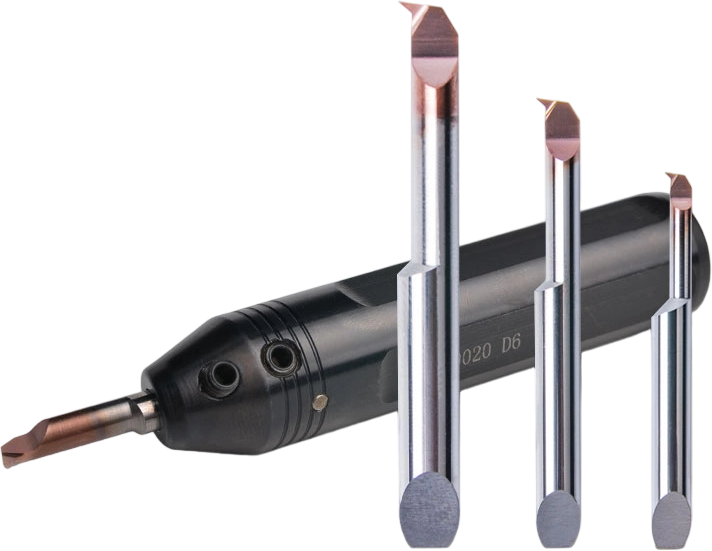
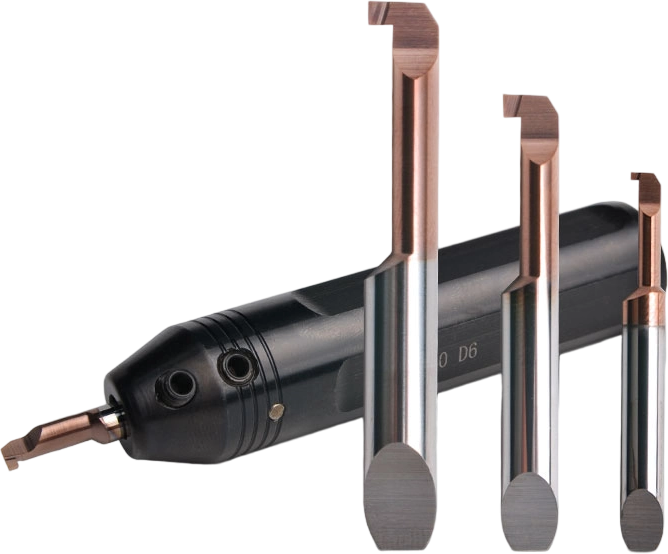
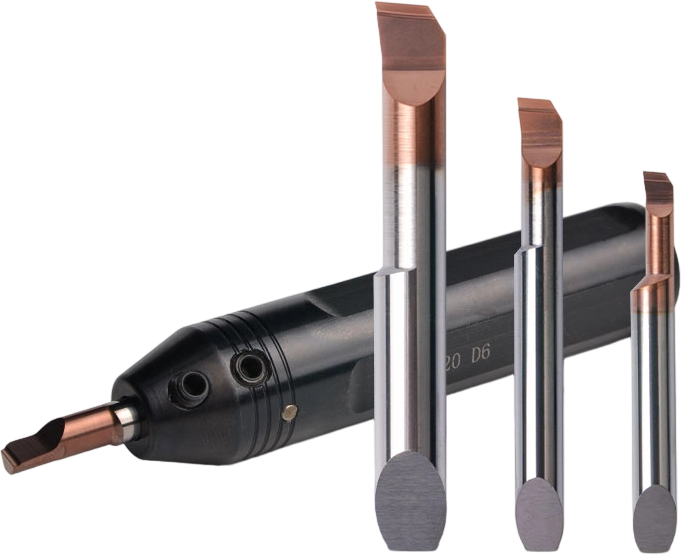
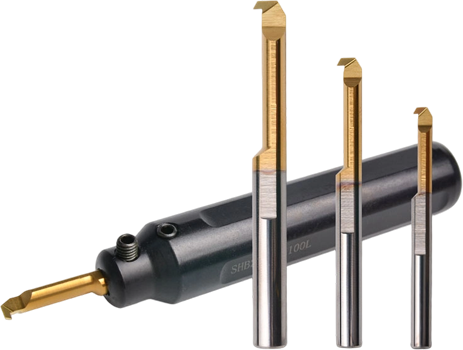
In modern precision machining, the difference between acceptable quality and exceptional performance often comes down to tooling. A carbide boring tool is no longer just an option—it's a strategic investment for manufacturers who demand tighter tolerances, longer tool life, and consistent surface finishes. For B2B buyers, especially in high-spec industries, selecting the right tooling directly impacts productivity, scrap rates, and overall profitability.
Unlike traditional materials, carbide-based solutions offer a unique combination of rigidity, wear resistance, and thermal stability. Whether you're machining deep internal bores in aerospace components or maintaining micron-level tolerances in medical parts, a well-selected carbide boring bar or carbide boring cutter can dramatically improve machining outcomes while reducing downtime and tool replacement costs.
1.What Is a Carbide Boring Tool?
A carbide boring tool is a precision cutting instrument designed for enlarging and finishing internal diameters in pre-drilled holes. It typically consists of a solid carbide shank or a carbide-tipped insert mounted on a boring bar. Compared to conventional steel or HSS tools, carbide offers superior hardness and resistance to deformation under cutting forces.
From a technical standpoint, carbide tools maintain cutting edge integrity even under high temperatures, making them ideal for high-speed CNC operations. This is particularly critical in applications where dimensional accuracy and repeatability are non-negotiable.
2.Why Carbide Boring Tools Outperform Traditional Materials
The shift from HSS to carbide is not just a trend—it's driven by measurable performance gains on the shop floor.
Rigidity and Vibration Control
A carbide boring bar provides significantly higher stiffness compared to steel alternatives. This is essential when dealing with long overhangs or deep-hole boring, where even minor deflection can lead to chatter and poor surface finish.
Exceptional Wear Resistance
Carbide maintains sharp cutting edges far longer than traditional materials. This translates into extended tool life and reduced frequency of tool changes—an important factor for high-volume production environments.
Thermal Stability at High Speeds
In CNC machining, heat generation is inevitable. Carbide’s ability to withstand high temperatures without losing hardness allows for faster cutting speeds and improved cycle times.
Surface Finish and Precision
For industries like aerospace and medical manufacturing, surface integrity is critical. A high-quality carbide boring cutter ensures smoother finishes and tighter tolerances, minimizing the need for secondary operations.
3.Real-World Application Scenarios
Aerospace Deep Hole Boring
In aerospace manufacturing, components often require deep internal cavities with strict tolerance requirements. A carbide boring tool with anti-vibration design ensures stable cutting even at extended reach, reducing the risk of part rejection.
Automotive Engine Block Machining
Engine blocks demand consistent bore geometry across high production volumes. Carbide boring bars enable manufacturers to maintain uniformity while minimizing tool wear over long production runs.
Precision Mold and Die Manufacturing
Mold makers rely on micro-level accuracy. A small diameter carbide boring cutter is ideal for finishing intricate internal geometries where precision directly affects mold performance.
Medical Device Components
In medical machining, materials like titanium and stainless steel are common. Carbide tools excel in these demanding materials, ensuring both precision and compliance with strict quality standards.
Micro and Small Diameter Boring
For applications involving tiny internal diameters, micro carbide boring tools offer unmatched stability and accuracy, even in challenging setups.
4.How to Choose the Right Carbide Boring Tool
Selecting the right carbide boring tool goes far beyond simply matching a tool to a hole diameter. For B2B buyers and machining professionals, the decision directly influences process stability, surface finish, cycle time, and ultimately cost per part. A well-chosen carbide boring bar or carbide boring cutter should align with the entire machining ecosystem—from machine capability to workpiece material and production goals.
Diameter and Overhang Ratio
One of the most critical yet often underestimated factors is the length-to-diameter (L/D) ratio. In boring operations, stability decreases exponentially as overhang increases. Even with the inherent rigidity of carbide, excessive tool extension can introduce vibration, deflection, and dimensional inaccuracies.
In practical terms, maintaining the shortest possible overhang is always the first priority. However, in deep-hole or complex internal geometries, this is not always feasible. In such cases, opting for an anti-vibration carbide boring bar becomes essential. These tools are specifically engineered with damping mechanisms that absorb cutting forces and minimize chatter, allowing for more stable machining even at extended reach.
It’s also worth noting that increasing tool diameter—even slightly—can significantly improve rigidity. Experienced machinists often balance accessibility and stiffness by selecting the largest possible tool diameter that the application allows, rather than defaulting to smaller tools for convenience.
Insert Geometry and Coating
Insert selection is where much of the performance optimization happens. The geometry of a carbide boring cutter insert determines how the tool interacts with the material—affecting chip formation, cutting forces, and heat generation.
For example, sharper geometries with positive rake angles are typically preferred for softer or ductile materials, as they reduce cutting resistance and improve surface finish. On the other hand, tougher geometries with reinforced cutting edges are better suited for harder materials or interrupted cuts, where edge strength is critical.
Coatings further enhance performance by addressing wear mechanisms and thermal challenges. TiAlN coatings are widely used for their excellent heat resistance and oxidation stability, making them suitable for high-speed machining. DLC coatings, with their low friction properties, are particularly effective in reducing built-up edge when machining non-ferrous materials like aluminum.
In real-world applications, the right combination of geometry and coating can extend tool life significantly while also improving consistency. For B2B buyers, this means fewer tool changes, more predictable performance, and better overall process control.
Machine Compatibility
Even the highest-quality carbide boring tool cannot perform optimally if it is mismatched with the machine tool. CNC machine characteristics—such as spindle speed, torque, rigidity, and coolant delivery—must all be considered during tool selection.
For high-speed machining centers, carbide boring cutters designed for elevated cutting speeds and thermal loads are essential. In contrast, older or less rigid machines may require more conservative tooling choices, prioritizing stability over aggressive cutting parameters.
Coolant capability is another key consideration. Through-tool coolant systems can dramatically improve chip evacuation and temperature control, especially in deep-hole boring. If the machine supports it, selecting a carbide boring bar designed for internal coolant delivery can enhance both tool life and surface quality.
Additionally, tool holder compatibility and clamping systems should not be overlooked. A rigid, well-balanced tool assembly is fundamental to achieving the full performance potential of carbide tooling.
Material Being Machined
The workpiece material ultimately dictates many aspects of tool selection. Different materials generate different cutting forces, heat levels, and wear patterns, all of which influence the choice of carbide grade, geometry, and coating.
For harder materials such as hardened steels or superalloys, a carbide boring tool with high wear resistance and thermal stability is essential. These applications often benefit from tougher carbide grades that can withstand elevated temperatures and resist edge chipping.
In contrast, machining softer materials like aluminum or mild steel requires a different approach. Here, sharper cutting edges and low-friction coatings help prevent material adhesion and ensure clean chip formation.
Difficult-to-machine materials—such as titanium or stainless steel—present a unique combination of high strength and poor thermal conductivity. In these cases, selecting a carbide boring cutter with optimized geometry for chip control, combined with effective coolant strategies, becomes critical to maintaining tool life and machining stability.
In practice, choosing the right carbide boring tool is a process of balancing multiple variables rather than optimizing a single factor. Diameter, overhang, insert design, machine capability, and material properties all interact in complex ways. For experienced B2B buyers and engineers, the goal is not just to select a tool that “works,” but to identify a solution that delivers consistent, repeatable performance under real production conditions.
5.Common Challenges and Practical Solutions
Even with a high-performance carbide boring tool, internal machining remains one of the most sensitive operations in CNC processes. The combination of limited visibility, long tool overhang, and confined chip evacuation makes boring inherently prone to instability. In real shop-floor conditions, several recurring challenges can significantly affect performance, surface quality, and tool life.
Chatter is arguably the most persistent issue, especially when using a carbide boring bar in deep-hole or long overhang applications. Unlike external turning, boring amplifies vibration because the cutting force acts inside the workpiece, often with limited support. Even a slight imbalance in setup rigidity can lead to harmonic vibration, resulting in poor surface finish, dimensional inaccuracy, and premature tool wear. In practice, machinists often find that reducing overhang—even marginally—can dramatically stabilize the cut. Increasing feed consistency rather than aggressively lowering it can also help avoid entering unstable cutting zones where chatter is more likely to occur.
Tool deflection is another critical concern, particularly in small diameter or micro machining scenarios. A slender carbide boring cutter, despite its inherent stiffness advantage over steel, can still bend under cutting pressure if the length-to-diameter ratio is too high. This deflection doesn’t just affect accuracy; it can also lead to tapering inside the bore, which is difficult to correct in finishing passes. In many cases, experienced operators compensate by slightly adjusting cutting parameters or selecting a more robust tool geometry, sometimes even sacrificing reach for stability when tolerances are extremely tight.
Chip evacuation inside a bore is often underestimated, yet it plays a decisive role in both tool life and part quality. Unlike open cutting environments, chips in boring operations have limited escape paths. When chips accumulate or recut, they can scratch the bore surface, damage the cutting edge, and generate additional heat. This is particularly problematic in materials like stainless steel or titanium, where chips tend to be stringy and adhesive. In real-world applications, optimizing coolant delivery—especially through-tool coolant systems—can significantly improve chip control. At the same time, selecting the right insert geometry on a carbide boring tool can help break chips more effectively before they become problematic.
Thermal expansion introduces another layer of complexity, especially in high-speed or high-precision environments. As heat builds up during continuous machining, both the tool and the workpiece can expand, subtly shifting dimensions beyond tolerance limits. While carbide materials are known for their thermal stability, they are not immune to prolonged heat exposure. This becomes particularly critical in industries like aerospace or medical manufacturing, where even micron-level deviations are unacceptable. Maintaining consistent coolant application and avoiding excessive cutting speeds in finishing passes are common practices to keep thermal effects under control.
Tool wear, although inevitable, behaves differently in carbide compared to traditional materials. Instead of gradual dulling, carbide edges may experience localized chipping or coating degradation, especially under unstable conditions. This makes process consistency more important than ever. In production environments, many operators rely on predictable tool life cycles rather than pushing tools to their absolute limits, ensuring that performance remains stable across batches.
Ultimately, while carbide boring tools provide a significant advantage in rigidity and durability, their performance is still closely tied to how well the entire machining system is optimized. Subtle adjustments in setup, tool selection, and cutting strategy often make the difference between unstable machining and a highly controlled, repeatable boring process.
6.Industry-Specific Use Cases
Aerospace
Requires extreme precision and reliability. Carbide boring tools are essential for machining high-strength alloys with tight tolerances.
Automotive
Focuses on efficiency and consistency. Carbide boring cutters help maintain quality in high-volume production.
Medical Manufacturing
Demands precision and clean finishes. Carbide tools ensure compliance with strict standards.
General Precision Engineering
From custom parts to specialized components, carbide boring bars provide flexibility and performance across a wide range of applications.
7.Carbide vs HSS Boring Tools: Practical Comparison
Feature
|
Carbide Boring Tool
|
HSS Tool
|
Hardness
|
Very High
|
Moderate
|
Tool Life
|
Long
|
Shorter
|
Cutting Speed
|
High
|
Lower
|
Heat Resistance
|
Excellent
|
Limited
|
Cost (Initial)
|
Higher
|
Lower
|
Cost (Long-Term)
|
Lower
|
Higher
|
For B2B buyers, the higher upfront cost of carbide is often offset by reduced downtime, longer tool life, and improved productivity.
8.Cost vs Performance: What B2B Buyers Need to Know
From a procurement perspective, evaluating a carbide boring tool purely on unit price is a common but costly mistake. In real production environments, the true metric that matters is cost per machined part, not the upfront tooling expense. While a carbide boring bar or carbide boring cutter may carry a higher initial price tag compared to HSS or standard alloy tools, its long-term economic value becomes clear when analyzed across the full machining cycle.
One of the most significant advantages lies in tool life consistency. Carbide tools maintain cutting edge integrity over longer production runs, which means fewer interruptions for tool changes. In high-volume manufacturing—such as automotive or aerospace components—this directly reduces machine idle time and operator intervention. Over weeks or months of continuous production, the cumulative savings from reduced downtime can far exceed the initial cost difference.
Another critical factor is cutting efficiency. A well-optimized carbide boring cutter allows for higher cutting speeds and more aggressive feeds without compromising surface finish or dimensional accuracy. This leads to shorter cycle times per part, effectively increasing spindle utilization. For B2B buyers managing tight production schedules or contract manufacturing deadlines, this gain in throughput often translates into higher revenue potential, not just cost savings.
Scrap rate reduction is also an often-overlooked contributor to cost efficiency. In precision machining, even minor deviations can result in rejected parts—especially in industries with strict tolerance requirements. The rigidity and stability of a carbide boring bar significantly reduce risks such as chatter, tapering, or poor surface finish. Fewer rejected parts mean less wasted material, less rework, and more predictable production outcomes.
When viewed holistically, carbide tooling also contributes to process stability. Stable processes are easier to standardize, automate, and scale—key priorities for modern manufacturing operations. This is particularly relevant for facilities integrating CNC automation or lights-out machining, where tool reliability becomes even more critical.
It's also worth considering the hidden operational costs associated with lower-quality tooling. Frequent tool changes, inconsistent performance, and unplanned downtime all add indirect costs that are rarely captured in initial procurement comparisons. In contrast, investing in a high-quality carbide boring tool often simplifies process control and reduces the need for constant adjustments on the shop floor.
Ultimately, for serious B2B buyers, the question shifts from 'How much does this tool cost?' to 'How much value does this tool generate over its lifecycle?' When evaluated through this lens, carbide boring tools consistently prove to be a more economical and strategic choice.
9.Final Thoughts: Strategic Investment in Precision
In an increasingly competitive manufacturing landscape, precision is no longer just a technical requirement—it's a business differentiator. The choice of tooling plays a central role in determining whether a company can consistently meet quality standards while maintaining profitability. A high-performance carbide boring tool, whether configured as a carbide boring bar or carbide boring cutter, is not simply a consumable—it is a core component of a high-efficiency machining strategy.
What separates leading manufacturers from the rest is not just the equipment they use, but how effectively they optimize every element of their process. Tooling decisions influence everything from cycle time and surface finish to machine utilization and operator workload. By adopting advanced carbide solutions, companies position themselves to achieve tighter tolerances, more stable processes, and greater production predictability.
Equally important is the alignment between tooling and application. There is no one-size-fits-all solution in boring operations. Factors such as workpiece material, bore depth, machine rigidity, and production volume all play a role in determining the ideal carbide boring cutter or boring bar configuration. This is why experienced buyers increasingly prioritize not just the product itself, but also the technical support and application expertise offered by tooling suppliers.
Looking ahead, trends such as automation, high-speed machining, and complex part geometries will only increase the demands placed on cutting tools. Carbide, with its superior mechanical and thermal properties, is well positioned to meet these challenges. However, maximizing its potential requires a proactive approach—continuous evaluation of tooling performance, process optimization, and willingness to adopt new technologies.
For decision-makers, the takeaway is clear: tooling should not be treated as a cost center, but as a performance driver. Investing in the right carbide boring tool is an investment in process reliability, production efficiency, and long-term competitiveness.
If your current machining operations are facing issues such as inconsistent quality, excessive downtime, or rising production costs, it may be time to take a closer look at your tooling strategy. Upgrading to advanced carbide boring solutions—and selecting the right partner to support that transition—can unlock measurable gains across your entire manufacturing workflow.
FAQ
1. How can I reduce chatter when using a carbide boring tool?
Use a shorter overhang, increase tool rigidity, and consider anti-vibration carbide boring bars. Adjust cutting parameters to stabilize the process.
2. What is the best carbide grade for deep hole boring?
Fine-grain carbide with high toughness is typically recommended, especially when combined with anti-vibration designs.
3. How do I select the right boring bar for small holes?
Choose a micro carbide boring bar with high stiffness and optimized geometry for chip evacuation.
4. Are carbide boring tools suitable for high-speed machining?
Yes, their thermal stability makes them ideal for high-speed CNC applications.
5. How can I extend the life of my carbide boring cutter?
Use proper cutting speeds, apply suitable coatings, and ensure effective coolant usage.