Whatsapp:+8619189715690 insight003@insight-t.com
Blog
HomeBlogCNC Boring Tool Selection Guide: How to Eliminate Chatter, Improve Precision, and Reduce Cost per Part
CNC Boring Tool Selection Guide: How to Eliminate Chatter, Improve Precision, and Reduce Cost per Part
Author:Ethan Walker Release Date:2026-03-19 Views:
Contents

In high-precision machining, the difference between a profitable production line and a costly one often comes down to one detail: the right cnc boring tool. For B2B buyers—whether you’re a manufacturing engineer, CNC programmer, or procurement manager—the wrong tool choice doesn’t just affect hole quality; it directly impacts scrap rate, cycle time, and tool consumption.

What many shops underestimate is how complex internal machining really is. When you’re dealing with deep holes, tight tolerances, or unstable setups, even a high-end machine can underperform without the proper small boring tool or micro internal boring tool. This guide breaks down not only what these tools are, but how to select and apply them in real-world scenarios to maximize precision and minimize cost.

1.Understanding the CNC Boring Tool in Modern Machining

A cnc boring tool is designed to enlarge and finish pre-existing holes with high accuracy. Unlike drilling, which creates a hole, or reaming, which slightly improves size and finish, boring allows for precise control over diameter, roundness, and surface finish.

In today’s CNC environments, boring tools are essential for:

  • Achieving micron-level tolerances
  • Correcting misaligned or imperfect drilled holes
  • Ensuring concentricity in multi-step machining

This becomes even more critical when using micro internal boring tools, where rigidity and vibration control are constant challenges due to small diameters and long overhangs.

2.Types of CNC Boring Tools and Their Practical Roles

Choosing the right type of cnc boring tool depends heavily on your application, material, and tolerance requirements.

Rough boring tools are used for removing large amounts of material quickly. They prioritize stability and chip evacuation over surface finish, making them ideal for pre-finishing operations in castings or forgings.

Fine boring tools are designed for high-precision finishing. These tools often feature micrometric adjustment mechanisms, allowing operators to fine-tune hole size within microns—essential in aerospace and medical applications.

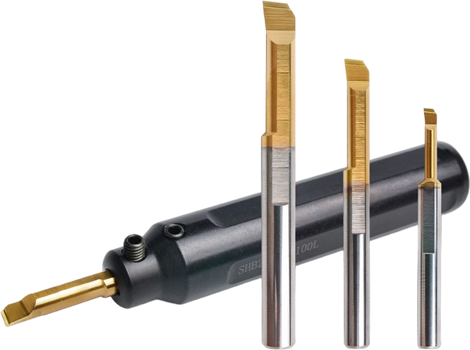
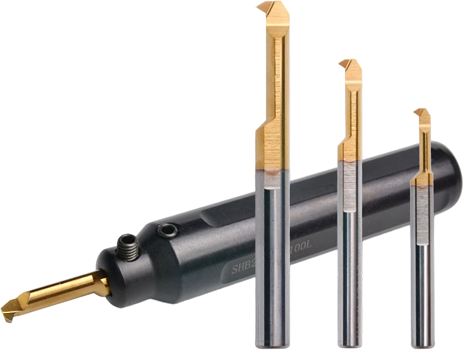
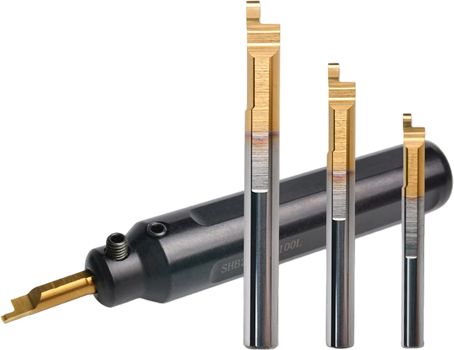
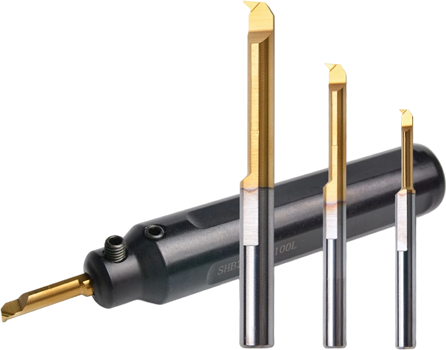
Small boring tools are specifically engineered for tight internal spaces. When hole diameters drop below standard ranges, rigidity becomes the primary concern. These tools typically use solid carbide construction to minimize deflection.

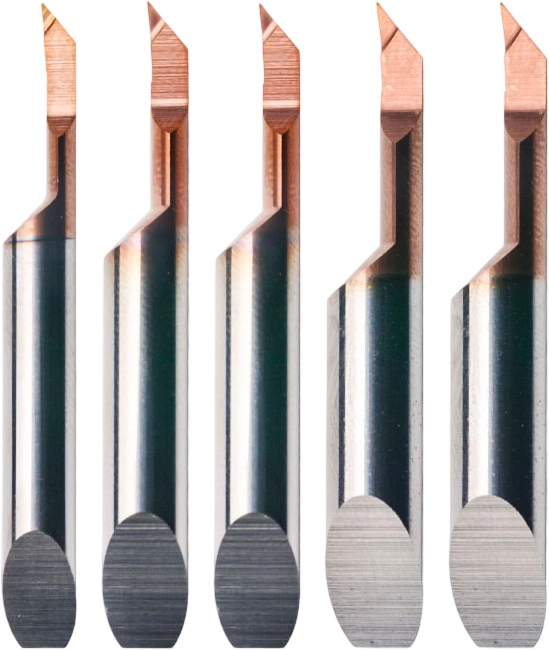
Micro internal boring tools push the limits even further. Used in industries like medical device manufacturing and precision electronics, they operate in extremely confined geometries. Here, tool balance, coating, and cutting parameters must be optimized to avoid tool breakage and poor surface quality.

Modular boring systems offer flexibility for B2B users managing diverse production lines. They allow quick changes of heads and shanks, reducing downtime and inventory costs.

3.Real-World Application Scenarios That Drive Tool Selection

In the automotive industry, boring operations are critical for engine blocks and transmission housings. These components require tight tolerances and consistent surface finishes across high volumes. A robust cnc boring tool with anti-vibration design ensures stability during long production runs, while a small boring tool may be required for intricate oil channels.

In aerospace manufacturing, precision is non-negotiable. Components such as landing gear parts or turbine housings demand exceptional roundness and surface integrity. Here, fine boring tools with advanced damping technology are often paired with optimized cutting parameters to eliminate chatter.

Medical manufacturing presents a different challenge. Producing implants or surgical components often involves extremely small holes with tight tolerances. A micro internal boring tool becomes essential, and even minor deviations can result in rejected parts. Tool geometry, coating, and machine stability must work in perfect harmony.

In mold and die production, deep cavity boring is common. Long overhangs increase the risk of vibration, making tool rigidity and holder selection critical. Using a high-quality cnc boring tool system with modular extensions can significantly improve machining stability.

4.Common Boring Challenges—and how to solve them

Chatter is the most frequent issue encountered in boring operations. It typically results from insufficient rigidity, excessive overhang, or improper cutting parameters. Reducing overhang length, selecting a more rigid small boring tool, or adjusting feed rates can significantly improve stability.

Poor surface finish is often linked to tool wear or incorrect insert geometry. Switching to a finishing-grade insert or optimizing cutting speed can yield immediate improvements.

Rapid tool wear is another concern, especially when machining hard materials. In such cases, selecting the right coating and ensuring proper coolant delivery are essential. For micro internal boring tools, even slight overheating can drastically shorten tool life.

Hole size deviation usually stems from tool deflection or thermal expansion. Using a fine boring tool with precise adjustment capability helps maintain dimensional accuracy.

5.How to Choose the Right CNC Boring Tool for Your Application

Selecting the right cnc boring tool is not just a technical decision—it’s a business decision. The right choice reduces cycle time, improves quality, and lowers cost per part.

Start with material compatibility. Different materials require different insert grades and coatings. Steel, aluminum, and titanium all behave differently under cutting forces.

Next, consider hole diameter and depth. For smaller diameters, a small boring tool or micro internal boring tool is necessary, but you must also account for rigidity and chip evacuation.

Overhang is another critical factor. The longer the tool extends from the holder, the greater the risk of vibration. Always aim for the shortest possible setup.

Insert selection also plays a major role. Geometry, coating, and edge preparation should match the machining conditions. For finishing operations, sharper edges and finer geometries are preferred.

Finally, ensure machine compatibility. Even the best tool cannot perform well on an unstable machine. Spindle condition, tool holder quality, and setup precision all contribute to the final result.

6.Cost Reduction Strategies Through Tool Optimization

Reducing cost per part is a top priority for any B2B operation. Optimizing your cnc boring tool strategy can deliver immediate financial benefits.

Extending tool life is one of the most effective ways to cut costs. This can be achieved through better coating selection, optimized cutting parameters, and proper coolant application.

Modular tooling systems also help reduce inventory costs. Instead of stocking multiple complete tools, you can interchange components based on the application.

Process optimization is another key factor. Adjusting cutting speeds and feeds to match the tool and material can significantly reduce cycle time without compromising quality.

For high-volume production, investing in a high-performance small boring tool or specialized micro internal boring tool often pays off quickly through improved consistency and reduced scrap rates.

7.Emerging Trends in CNC Boring Technology

The future of cnc boring tool technology is moving toward smarter, more connected systems. Digital integration allows real-time monitoring of tool performance, helping manufacturers predict wear and prevent failures.

Advanced damping technologies are also evolving, enabling longer overhangs without compromising stability. This is particularly beneficial for deep-hole and micro-boring applications.

Additionally, the demand for ultra-precision machining is driving innovation in micro internal boring tools, with new materials and coatings improving both performance and durability.

8.Conclusion: Precision Starts with the Right Tool

In today’s competitive manufacturing landscape, selecting the right cnc boring tool is more than a technical choice—it’s a strategic advantage. Whether you’re working with large automotive components or ultra-precise medical parts, the combination of the right tool, proper setup, and optimized parameters determines your success.

For B2B buyers, understanding the nuances between a standard tool, a small boring tool, and a micro internal boring tool can lead to better purchasing decisions, improved machining performance, and ultimately, higher profitability.

FAQ

What is a CNC boring tool used for?
A CNC boring tool is used to enlarge and finish existing holes with high precision. It improves hole diameter accuracy, roundness, and surface finish, making it essential for applications requiring tight tolerances.
What is the difference between a boring tool and a drilling tool?
A drilling tool creates a new hole, while a CNC boring tool refines and enlarges an existing one. Boring offers much higher accuracy and better surface finish compared to drilling.
How do I choose the right CNC boring tool?
Choosing the right CNC boring tool depends on material type, hole diameter, depth, tolerance requirements, and machine rigidity. For smaller diameters, a small boring tool or micro internal boring tool is typically required.
What causes chatter in CNC boring and how can I fix it?
Chatter is usually caused by tool deflection, excessive overhang, or incorrect cutting parameters. To reduce it, use a more rigid cnc boring tool, minimize overhang, and optimize feed rate and spindle speed.
What is the best boring tool for small diameter holes?
For small holes, a small boring tool or micro internal boring tool made from solid carbide is the best choice due to its higher rigidity and precision in tight spaces.
What is a micro internal boring tool used for?
A micro internal boring tool is designed for machining extremely small internal diameters, commonly used in medical devices, precision electronics, and aerospace components.
How can I improve surface finish in boring operations?
Improving surface finish involves using a fine boring tool, selecting the correct insert geometry, optimizing cutting parameters, and ensuring proper machine stability.
How do I extend CNC boring tool life?
Tool life can be extended by optimizing cutting speeds and feeds, using proper coatings, ensuring effective coolant delivery, and selecting the right tool for the material.
What industries use CNC boring tools the most?
CNC boring tools are widely used in automotive, aerospace, medical manufacturing, energy, and mold & die industries where high-precision internal machining is required.