A Technical Deep-Dive for CNC Engineers, Purchasing Managers, and Workshop Supervisors
1.Introduction: The Hidden Cost of Suboptimal Boring Operations
In precision machining operations, hole-making represents one of the most critical yet frequently underestimated processes. While drilling creates the initial opening, it is the boring tool that determines final dimensional accuracy, surface finish quality, and production economics. A mismatched boring tool can result in taper errors exceeding 0.02mm, surface roughness above Ra 3.2μm, and tool life reduction of up to 60 percent. For high-volume production runs, these seemingly small deviations translate to thousands of dollars in scrap costs and lost productivity.
This comprehensive guide examines precision boring tools, CNC boring bars, and indexable boring heads from both technical and economic perspectives. Our goal is to help manufacturing professionals make informed decisions that directly impact their bottom line, moving beyond catalog specifications to understand real-world application requirements.
2.Understanding Boring Tool Types and Applications
Solid Carbide Boring Tools
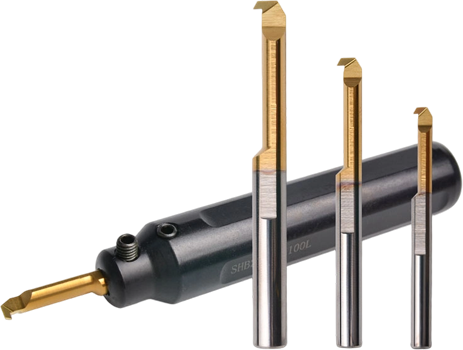
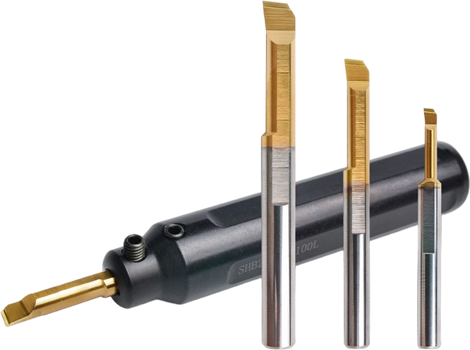
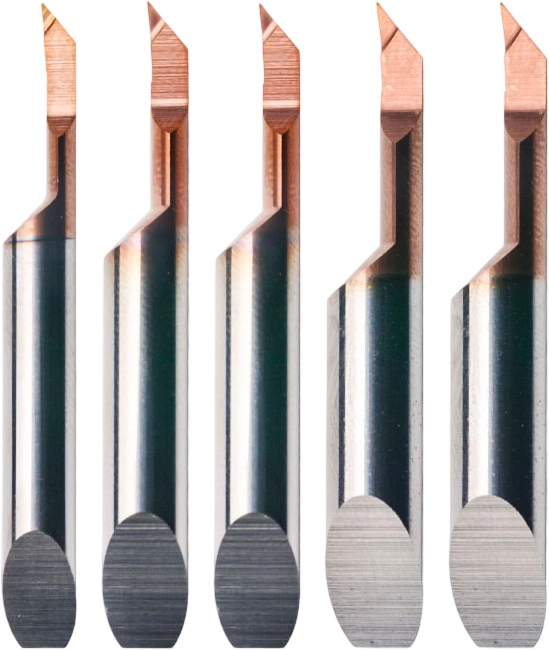
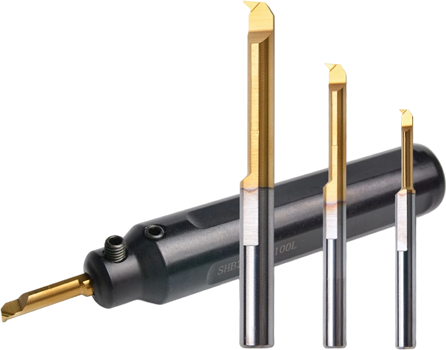
Solid carbide boring tools represent the gold standard for applications demanding maximum rigidity and superior surface finishes. These monolithic tools eliminate interface weaknesses found in modular systems, making them ideal for machining small diameter holes ranging from Ø2mm to Ø20mm where precision is paramount.
Medical device manufacturers rely heavily on solid carbide boring tools when machining titanium and stainless steel implant components that require surface finishes of Ra 0.4μm or better. The precision mold making industry similarly depends on these tools for creating guide pin holes with H7 tolerance requirements. In the electronics sector, solid carbide tools enable micro-machining of connector holes as small as Ø0.3mm with exceptional repeatability.
For steel machining applications, cutting speeds between 80 and 250 meters per minute are typically recommended, while aluminum allows for much higher speeds ranging from 200 to 600 meters per minute. Feed rates generally fall between 0.05 and 0.15 millimeters per revolution, with depth of cut varying based on whether the operation is finishing or roughing. A professional tip for machinists working with stainless steel is to reduce cutting speed by approximately 20 percent while increasing feed rate by 15 percent compared to standard steel parameters, which typically yields optimal tool life.
Modular Boring Systems
Modular boring tools have revolutionized flexible manufacturing by combining a basic holder with interchangeable cutting heads. This design philosophy significantly reduces inventory requirements while maintaining machining versatility. Leading manufacturers such as BIG Kaiser with their EWN series and Sandvik Coromant with their 825 line offer systems capable of diameter adjustments ranging from 0 to 50 millimeters using a single tool body, with micro-adjustment precision reaching 0.002 millimeters.
The automotive industry provides an excellent application example for modular boring systems. Engine block line boring operations benefit tremendously from these tools, where a single tool body equipped with multiple heads can process main bearing journals ranging from Ø50mm to Ø75mm without requiring time-consuming tool changes. The quick-change capabilities inherent in modular systems can reduce setup time by as much as 70 percent compared to traditional dedicated tooling approaches.
Twin-Cutter Boring Heads
When heavy roughing operations demand high material removal rates, twin-cutter boring heads deliver exceptional performance. These tools feature two symmetrically arranged indexable inserts that balance cutting forces, enabling material removal rates three to four times higher than conventional single-point boring tools. The balanced cutting force design also permits extended overhang applications with length-to-diameter ratios reaching 8 to 1. while maintaining stability even in interrupted cuts common when machining castings with sand inclusions.
For deep hole boring applications where the length-to-diameter ratio exceeds 5. machinists should always specify anti-vibration bars incorporating tuned mass dampers. These specialized bars eliminate chatter that would otherwise compromise surface finish and dimensional accuracy. Twin-cutter heads excel in large diameter hole machining ranging from Ø40mm to Ø500mm, particularly when working with cast iron and steel materials.
Finish Boring Tools
The final precision operations in any boring sequence demand tools capable of achieving the highest accuracy levels. Premium finish boring tools from manufacturers like Kennametal and Wohlhaupter offer concentricity adjustment within 0.001 millimeters, automatic diameter compensation for insert wear, and integrated coolant delivery systems for effective chip evacuation. These features make finish boring tools indispensable when tolerances of IT6 to IT7 are required, along with mirror surface finishes.
3.Industry-Specific Application Analysis
Aerospace Machining Challenges
The aerospace sector presents unique challenges for boring operations due to the specialized materials involved. Inconel 718 exhibits high work-hardening tendencies and contains abrasive carbides that accelerate tool wear. Titanium alloys such as Ti-6Al-4V feature low thermal conductivity, causing dangerous heat concentration at the cutting edge. Aluminum 7075. while easier to machine, can form built-up edges at high cutting speeds that degrade surface finish.
Addressing these challenges requires careful boring tool configuration. Insert geometry should feature positive rake angles between 5 and 7 degrees for aluminum machining, while negative rake angles of approximately minus 5 degrees work better for titanium. Coating selection is equally critical, with PVD TiAlN coatings performing well for nickel alloys and uncoated polished inserts proving superior for aluminum applications. High-pressure coolant delivery at 70 bar or greater through the spindle effectively manages heat and improves chip evacuation.
The economic impact of proper boring tool selection in aerospace manufacturing cannot be overstated. Optimized tooling configurations can reduce machining time by 35 percent while extending insert life from 15 minutes to 45 minutes per edge when roughing Inconel components. These improvements directly translate to reduced production costs and improved delivery schedules.
Automotive High-Volume Production
Modern automotive manufacturing demands cycle times under 45 seconds per bore, process capability indices of 1.67 or higher for critical dimensions, and tool life exceeding 50.000 holes between changes. Meeting these stringent requirements demands a systematic approach to boring tool selection and application.
An optimal engine block boring sequence typically involves three stages. The rough boring operation employs an indexable twin-cutter head ranging from Ø90mm to Ø100mm with a depth of cut between 2 and 3 millimeters. Semi-finishing follows using a modular boring bar with replaceable heads and a reduced depth of cut of 0.5 millimeters. The final finish boring stage utilizes a precision fine boring head equipped with CBN or ceramic inserts to achieve the required surface finish and dimensional accuracy.
A Tier-1 automotive supplier implemented this three-stage boring sequence and achieved remarkable results. Dimensional variation decreased from plus or minus 0.015 millimeters to plus or minus 0.005 millimeters. Tool cost per engine dropped by 22 percent, while the scrap rate fell from 1.2 percent to just 0.3 percent. These improvements demonstrate the tangible benefits of systematic boring tool optimization.
Hydraulic Component Manufacturing
Hydraulic valve bodies and manifold blocks require boring operations that achieve straightness tolerances of 0.01 millimeters per 100 millimeters of depth, surface finishes between Ra 0.8 and 1.6 micrometers for proper seal function, and intersecting holes without burr formation. These requirements make boring tool selection particularly critical in hydraulic component manufacturing.
Deep hole boring applications are categorized by length-to-diameter ratio. For holes between 50 and 100 millimeters deep with ratios between 3 to 1 and 5 to 1. standard anti-vibration boring bars provide adequate performance. As depth increases to between 100 and 200 millimeters with ratios of 5 to 1 to 10 to 1. damped boring bars such as the Sandvik 570 series become necessary. For extreme deep hole applications ranging from 200 to 500 millimeters with ratios between 10 to 1 and 25 to 1. specialist deep hole boring systems are required.
Tool deflection increases with the cube of overhang, meaning that at a length-to-diameter ratio of 6. deflection is 216 times greater than at a ratio of 1. Machinists should never exceed the manufacturer's specified length-to-diameter ratio to avoid compromising dimensional accuracy and surface finish.
Wind Energy Sector Applications
Wind turbine main bearing housings present unique boring challenges due to their massive scale. Diameters typically range from Ø500mm to Ø3000mm, with materials including ductile iron GGG50 and cast steel GS-25Mn5. Despite these large sizes, tolerance requirements of IT7 to IT8 must still be maintained.
These applications require custom boring heads with radial feed mechanisms, often utilizing multiple cartridges for balanced cutting. The machine tool must provide rigid spindle support, with ISO 50 taper connections as a minimum requirement. Adaptive feed control based on real-time cutting force monitoring helps maintain consistent machining conditions, while in-process measurement systems verify diameter accuracy throughout the operation.
4.Boring Tool Selection Decision Framework
Defining Technical Requirements
Before selecting a boring tool, engineers should create a comprehensive specification checklist covering all relevant parameters. This includes the hole diameter range from minimum to maximum, the required tolerance grade such as IT6. IT7. or IT8. and the surface finish specification expressed as an Ra value. The hole depth and resulting length-to-diameter ratio significantly influence tool selection, as do the material type and hardness. Production considerations such as batch size and volume also factor into the decision, along with the available machine tool specifications including spindle power and rigidity.
Total Cost of Ownership Analysis
Evaluating boring tools on purchase price alone leads to poor decisions. A comprehensive total cost of ownership calculation must include the initial tool cost, the machine rate multiplied by setup time, the insert cost multiplied by edges used over the tool life, and the scrap cost associated with rejected parts.
Consider a comparison between budget and premium tooling options. A budget tool might cost 150 dollars initially compared to 450 dollars for a premium alternative. Setup time per change could be 15 minutes versus 5 minutes, while insert costs might be 8 dollars versus 12 dollars per edge. However, the premium tool might deliver 500 holes per edge compared to 200 for the budget option, with scrap rates of 0.5 percent versus 2 percent. When calculated over 10.000 holes, the total cost of ownership for the budget tool reaches 1.240 dollars while the premium tool costs only 690 dollars, demonstrating that higher initial investment often yields lower long-term costs.
Supplier Evaluation
Assessing potential suppliers requires evaluating multiple weighted factors. Technical support capabilities account for 25 percent of the evaluation weight, with questions regarding application engineering availability and on-site support services. Delivery reliability represents 20 percent of the score, examining stock availability and lead times for special orders. The product range breadth contributes another 20 percent, determining whether the supplier can provide complete solutions from roughing to finishing operations. Quality consistency also represents 20 percent of the evaluation, considering ISO certification status and batch traceability systems. Finally, cost competitiveness accounts for 15 percent, with emphasis on total cost rather than catalog price alone.
5.Advanced Operating Techniques
Cutting Parameter Optimization
Successful boring operations depend on correct cutting parameter selection. The spindle speed in revolutions per minute is calculated by multiplying the cutting speed in meters per minute by 1000. then dividing by pi times the diameter in millimeters. The feed rate in millimeters per minute equals the spindle speed multiplied by the feed per revolution.
Material-specific parameters vary considerably. Low-carbon steel permits cutting speeds between 120 and 180 meters per minute with feed rates of 0.1 to 0.2 millimeters per revolution using P20 to P30 grade inserts. Alloy steel hardened to 30 to 35 HRC requires reduced speeds of 80 to 120 meters per minute with feeds of 0.08 to 0.15 millimeters per revolution and P10 to P20 inserts. Stainless steel 316L demands even more conservative parameters at 60 to 100 meters per minute with 0.08 to 0.12 millimeter feeds using M20 to M30 grades. Aluminum 6061 allows aggressive machining at 200 to 400 meters per minute with feeds of 0.1 to 0.3 millimeters per revolution using K20 to K30 inserts. Cast iron GGG50 typically runs at 80 to 120 meters per minute with 0.1 to 0.25 millimeter feeds using K10 to K20 grades. Titanium Ti6Al4V requires the most conservative approach at just 30 to 50 meters per minute with 0.08 to 0.12 millimeter feeds using S10 to S20 grades.
Troubleshooting Common Issues
Taper or bell-mouth errors typically result from tool deflection caused by excessive overhang. The solution involves reducing the length-to-diameter ratio or increasing the tool diameter to improve rigidity. Chatter marks indicate insufficient rigidity or incorrect spindle speed, which can be addressed by adjusting the RPM plus or minus 20 percent, increasing feed rate, or verifying proper tool clamping. Poor surface finish often stems from built-up edge formation or inappropriate coating selection, remedied by increasing cutting speed or switching to sharp uncoated inserts. Diameter variation usually indicates thermal expansion or insert wear, requiring implementation of in-process measurement and temperature compensation. Oversized holes typically result from tool pressure deflection, which can be mitigated by reducing radial depth of cut and improving setup rigidity.
6.Quick Reference Guide
Automotive engine block boring typically employs modular twin-cutter roughing tools combined with fine boring heads, targeting cylinder bores between Ø75mm and Ø100mm with IT7 tolerances and Ra 0.8 micrometer surface finishes. Concentricity to the crankshaft axis must be maintained within 0.01 millimeters.
Hydraulic valve body applications utilize anti-vibration boring bars capable of length-to-diameter ratios of 6 to 1. targeting diameters between Ø16mm and Ø32mm with straightness of 0.01 millimeters per 100 millimeters. Cross-hole deburring capability is essential for these components.
Aerospace titanium components require high-positive rake boring bars with through-coolant capability, targeting diameters between Ø10mm and Ø50mm with IT6 tolerances and Ra 0.4 micrometer finishes. Heat-resistant insert coatings such as AlTiN are critical for these applications.
Mold guide bushings demand solid carbide micro-boring tools capable of machining diameters between Ø3mm and Ø12mm with H7 tolerances and Ra 0.2 micrometer surface finishes. Spindle runout must be controlled within 0.003 millimeters.
7.Conclusion: The Strategic Value of Precision Boring
Selecting the optimal boring tool is not merely a procurement decision. It is a strategic manufacturing choice that directly impacts quality, productivity, and profitability. The transition from adequate tooling to application-optimized precision boring tools typically yields return on investment within three to six months through reduced scrap rates, extended tool life, and increased machine utilization.
As manufacturing evolves toward Industry 4.0 paradigms, boring tool systems with integrated sensors for wear monitoring and automatic compensation are becoming essential for lights-out machining operations. Forward-thinking manufacturers should evaluate not only current requirements but future automation compatibility when selecting boring tool partners and systems.
The next step for manufacturing professionals is to conduct an audit of current boring operations using the selection framework presented in this guide. By identifying the top three applications where improved tooling could deliver measurable cost savings, and requesting application engineering support from cutting tool suppliers to validate the business case, companies can systematically improve their machining economics and competitive position.