What Is a Lathe Collet and Why It Is Critical in Precision Turning
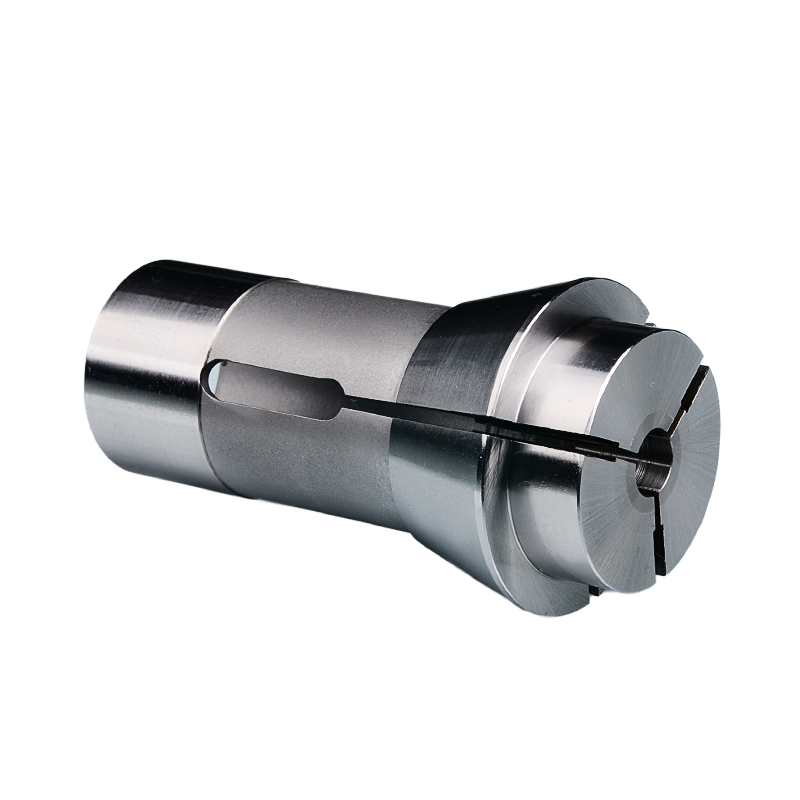
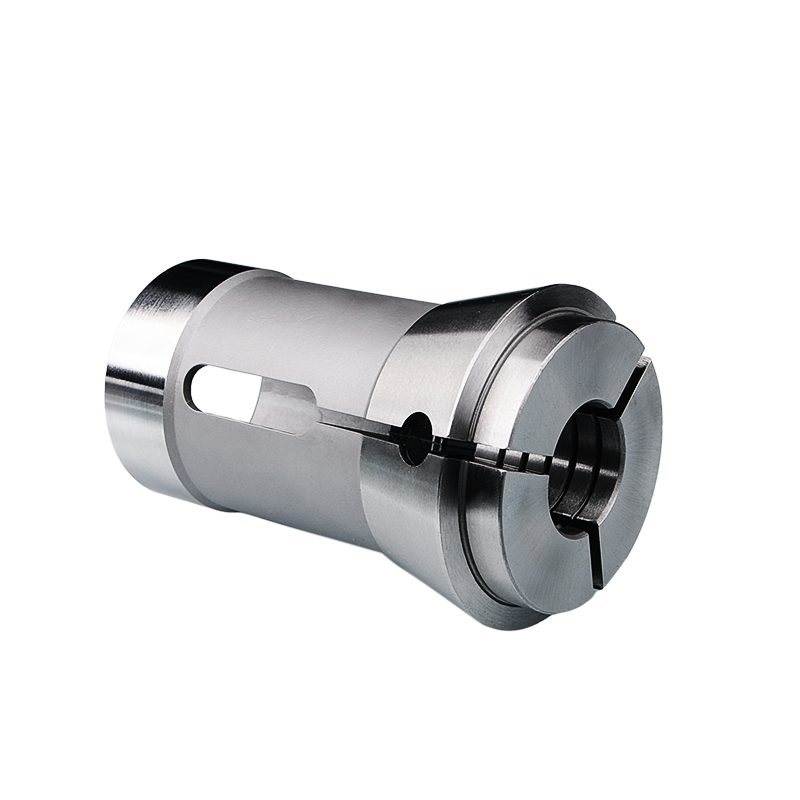
Lathe collet is a precision work-holding component designed to clamp round bar stock or finished parts with high concentricity and uniform radial force. Compared with traditional jaw chucks, a lathe collet provides full-circumference contact, which significantly improves clamping stability, reduces deformation, and minimizes runout. In modern CNC turning and Swiss-type machining, the lathe collet is not just a holding accessory — it is a core accuracy element that directly affects dimensional consistency and surface finish.
From a production engineering perspective, the lathe collet influences process capability as much as cutting tools and spindle condition. When tolerances are tight and batch sizes are large, even small improvements in clamping repeatability can reduce scrap rates and tool wear. That is why high-precision CNC environments typically standardize on certified precision lathe collet systems rather than general-purpose workholding.
How a Lathe Collet Works Inside CNC and Swiss Lathes
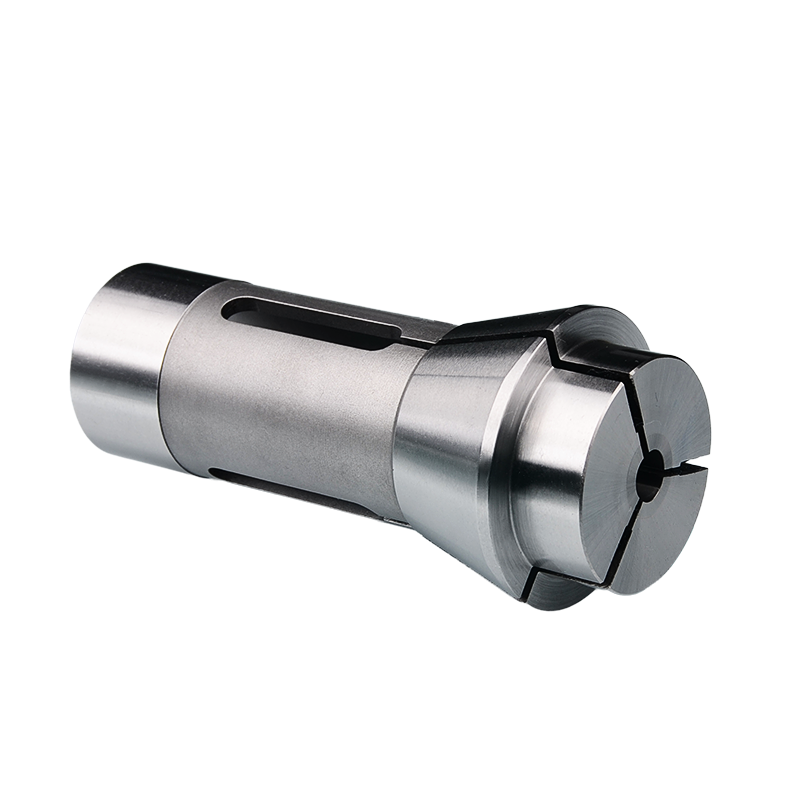
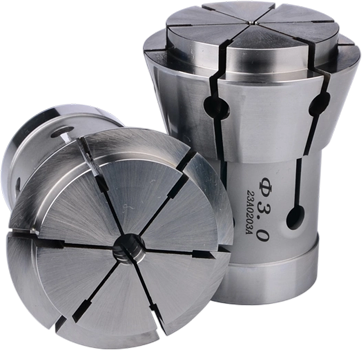
A lathe collet operates through elastic compression. The collet body contains multiple longitudinal slots that allow controlled radial flex. When the machine’s drawbar or closing mechanism applies axial force, the collet is pulled or pushed into a tapered seat. This converts axial motion into radial clamping pressure around the workpiece.
Because the contact is continuous around the diameter, a precision lathe collet distributes force more evenly than segmented jaws. This uniform pressure reduces localized distortion, which is especially important when machining thin-wall parts, micro-diameter components, or high-value materials. In Swiss-type machines, the lathe collet often works together with a guide bush system, supporting long slender stock close to the cutting zone and maintaining stability during sliding headstock movement.
The mechanical behavior of the collet depends heavily on its slot geometry, heat treatment, and elastic modulus. A well-designed CNC lathe collet maintains consistent collapse behavior across thousands of cycles without plastic deformation.
Main Types of Lathe Collet Used in Turning Operations
Lathe collet systems are not all the same, and their structural differences affect accuracy, axial positioning, and application suitability. Understanding these types helps engineers and buyers match the right collet to the process.
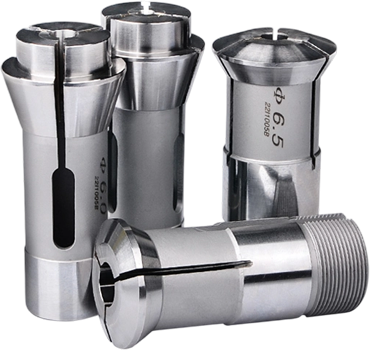
Pull-back collets are widely used in standard CNC turning centers. As the collet closes, it is drawn slightly backward into the spindle taper. This produces strong seating force but introduces a small axial shift of the workpiece. For general turning, this movement is usually acceptable, but it can create variation when shoulder lengths must be tightly controlled.
Dead length collets are designed so that the workpiece does not move axially during clamping. The closing action occurs without rearward draw. This makes the dead length lathe collet ideal for precision shoulder operations, grooving close to faces, and secondary operations where length repeatability is critical.
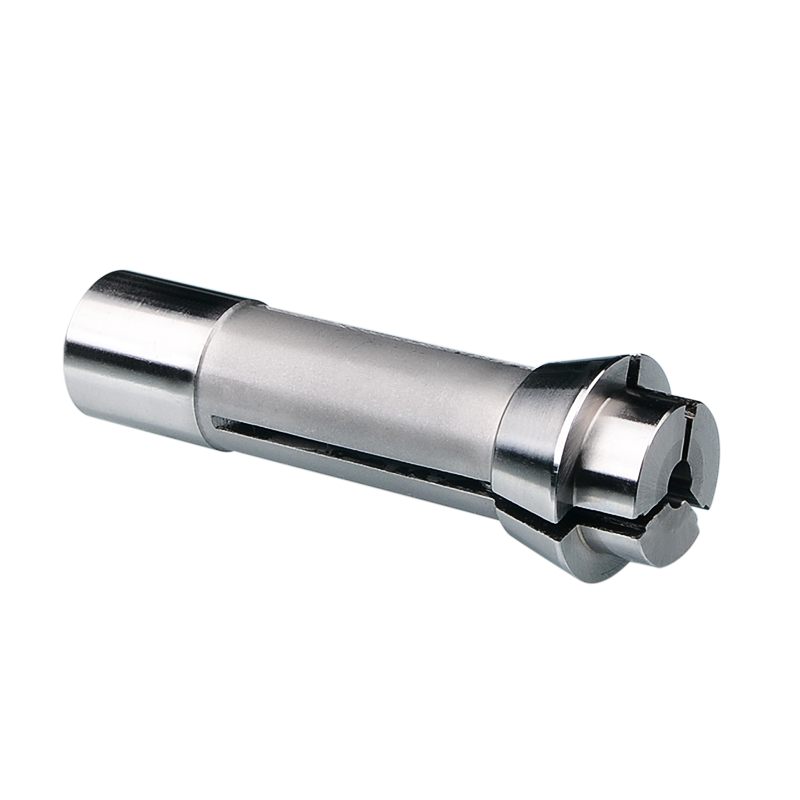
Swiss lathe collets are optimized for sliding headstock machines and small-diameter bar work. These collets are typically paired with guide bush collets to control bar whip and vibration. Their geometry emphasizes concentricity and wear resistance under continuous feed conditions.
Special variants also exist for step clamping, emergency boring, square or hex stock, and custom profiles. In high-mix manufacturing, custom-bored lathe collets are frequently used to match near-net part geometry and improve grip without over-compression.
Precision Ratings and Runout Standards for Lathe Collets
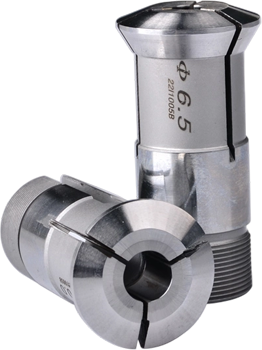
Precision ratings for a lathe collet are usually expressed through runout and repeatability values. High-grade collets used in precision CNC work commonly deliver nose runout below 0.005 mm when installed in a clean, undamaged spindle taper. Ultra-precision applications may require even tighter limits.
However, measured runout is not determined by the lathe collet alone. It is the result of a tolerance chain that includes spindle taper quality, collet seat finish, closing nut accuracy, and cleanliness. Even microscopic contamination between taper surfaces can noticeably increase eccentricity. That is why professional setups treat collet installation as a precision assembly step rather than a routine swap.
Repeatability is equally important. A precision lathe collet should return to nearly the same clamping position after repeated open-close cycles. Loss of repeatability often indicates slot fatigue, taper wear, or over-tightening beyond the designed elastic range. Monitoring part concentricity trends in production is an effective early warning method.
Lathe Collet Materials and Wear Resistance
Most standard lathe collets are manufactured from high-grade spring steel that is hardened and tempered to maintain elastic memory. This allows the collet to flex repeatedly without permanent deformation. Proper heat treatment ensures that the clamping range remains stable across long production runs.
In more demanding environments, carbide-lined lathe collets are used. These designs incorporate a tungsten carbide inner sleeve that dramatically increases wear resistance. They are especially effective when machining hardened steels, stainless alloys, or abrasive materials. In Swiss machining, carbide-lined collet and guide bush combinations often extend service life several times compared with all-steel designs.
Surface treatments also play a role. Black oxide, nitriding, and specialty low-friction coatings can improve corrosion resistance and reduce micro-slip at the clamping interface. Over long cycles, these factors contribute to more stable grip force and less bore degradation.
Dead Length vs Pull-Back Lathe Collet Systems in Practice
Choosing between dead length and pull-back lathe collet systems should be based on tolerance structure rather than habit. Pull-back systems provide strong mechanical seating and are robust for general turning. They are often simpler and widely supported across machine models.
Dead length systems become advantageous when axial dimensions are tightly controlled relative to the clamped face. Because the workpiece does not shift during closure, shoulder distances and groove locations remain more consistent. This is particularly valuable in medical components, connector pins, and other short-length precision parts.
The tradeoff is that dead length systems demand cleaner setup conditions and correct force adjustment. Without proper maintenance, their theoretical accuracy advantage can be lost.
Machine Compatibility and Brand-Specific Collet Systems
Lathe collet geometry is often machine-specific. Swiss-type platforms such as Star, Citizen, Tsugami, and Tornos each use distinct collet nose formats and dimensional standards. Even within a single brand, different spindle sizes and series may require different collet types.
Using the correct machine-matched lathe collet is essential for taper contact integrity and load distribution. Near-fit substitutions can lead to uneven seating, accelerated wear, and unstable runout. Professional shops typically maintain brand-segmented collet inventories and track usage by machine and job type.
Custom lathe collet manufacturing is common where part geometry or bar size falls outside standard ranges. In those cases, bore profile, relief angles, and slot count are engineered specifically for the application to balance grip and elasticity.
Common Lathe Collet Problems and Their Root Causes
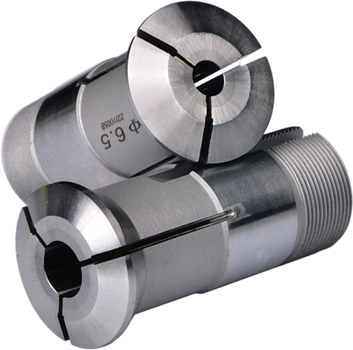
Lathe collet performance usually degrades gradually. Bore wear increases runout and reduces grip force. Slot cracking can occur due to repeated over-compression or material fatigue. Taper fretting appears when there is micro-movement between the collet and spindle seat under load.
Bell-mouthing of the bore is another frequent issue. This happens when undersized stock is repeatedly clamped, concentrating stress near the front edge and widening the entrance. The result is reduced contact length and poorer concentricity. Keeping bar diameters within the recommended collapse range of the lathe collet helps prevent this pattern.
Thermal load should also be considered. In high-speed production, heat from the workpiece can transfer into the collet nose and slightly change clamping behavior. Stable coolant application and controlled cycle timing help maintain consistency.
How to Choose the Right Lathe Collet for Your Application
Selecting the right lathe collet starts with diameter and tolerance requirements, but expert selection goes further. Engineers evaluate collapse range, required runout, material compatibility, cycle volume, and axial positioning needs. A high-mix, low-volume shop may prioritize flexibility, while a mass-production line may prioritize wear life and repeatability.
Applications involving abrasive or hardened materials often justify carbide-lined collets. Processes with tight axial tolerances benefit from dead length systems. Micro-diameter Swiss turning requires careful matching between guide bush and collet to maintain bar stability.
Supplier quality matters as much as design. A reliable lathe collet supplier should provide runout specifications, material and heat-treatment data, and consistent batch quality. In B2B procurement, consistency across shipments is often more valuable than peak performance of a single sample.
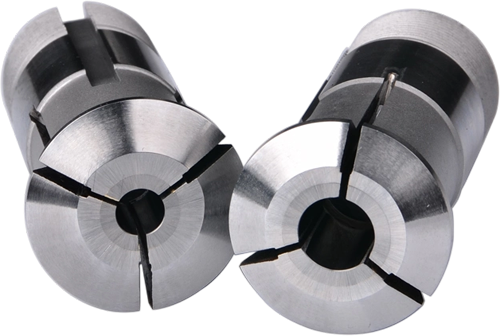
Best Practices for Lathe Collet Use and Maintenance
Lathe collet accuracy depends heavily on maintenance discipline. Tapers and seats should be cleaned before every installation, and collets should be inspected regularly for bore wear and slot damage. Closing force should stay within machine builder recommendations to avoid permanent elastic loss.
In high-volume environments, rotating multiple collets through the same job spreads wear and makes performance drift easier to detect. Many advanced workshops log collet usage hours similarly to cutting tools. This data-driven approach improves predictability and reduces unexpected quality deviations.
When treated as a precision component rather than a consumable accessory, the lathe collet becomes a stable foundation for high-accuracy turning. Proper selection, correct system type, and disciplined maintenance together ensure consistent machining results and lower total production cost.
FAQ: Lathe Collet Technical and Selection Questions
What is the difference between a lathe collet and a chuck?
A lathe collet grips the workpiece with full 360-degree contact, while a chuck uses separate jaws. Because of this, a lathe collet generally provides better concentricity, lower runout, and less part deformation. Chucks are more flexible for irregular shapes and larger diameters, but collets are preferred for precision round stock and high-tolerance production.
What runout can a precision lathe collet achieve?
A high-quality precision lathe collet installed in a clean, undamaged spindle taper can typically achieve runout below 0.005 mm at the nose. Ultra-precision systems may reach even tighter values. Actual performance depends on spindle condition, taper cleanliness, and correct closing force — not only the collet itself.
When should a lathe collet be replaced?
A lathe collet should be replaced when you observe increasing runout, reduced grip force, inconsistent part concentricity, visible bore wear, slot cracking, or taper fretting marks. In production environments, many shops replace collets based on cycle count or measured runout drift rather than waiting for visible failure.
What is the advantage of a dead length lathe collet?
A dead length lathe collet does not pull the workpiece backward during clamping. This maintains axial position and improves length consistency for shoulder and face-referenced dimensions. It is especially useful in secondary operations and tight axial tolerance parts, though it requires proper setup and maintenance.
Are carbide-lined lathe collets worth it?
Carbide-lined lathe collets are usually worth the investment when machining hardened steels, stainless alloys, or abrasive materials, and in long production runs. They offer significantly improved wear resistance and longer accuracy life. For short runs or soft materials, standard hardened spring steel collets are often sufficient.